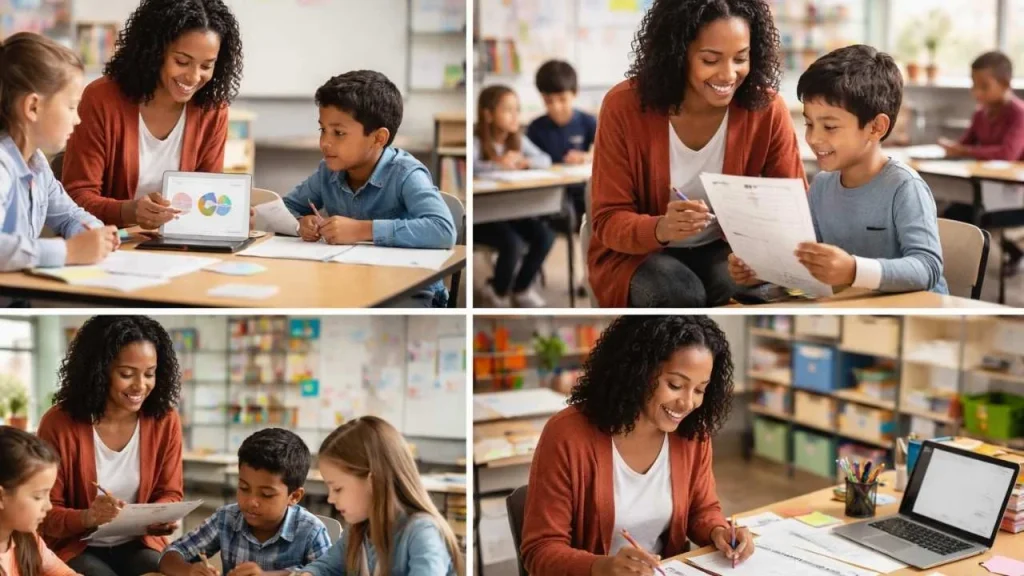

Assessment is a central component of elementary education in Chicago Public Schools (CPS). Teachers use multiple methods to evaluate academic, social, and emotional growth, helping students reach grade-level standards while identifying areas that need support.

“Assessments in CPS elementary schools are not just about grades,” says Dr. Jessica Rivera, a Chicago-based education consultant. “They’re tools for understanding each child’s learning, informing instruction, and fostering growth.”

From kindergarten through grade 5, CPS teachers combine formal and informal assessments to provide a complete picture of student performance. This allows educators to tailor lessons, intervene early, and ensure students are on track for middle school.
CPS Elementary Assessment Methods by Grade: Overview
| Grade Level | Types of Assessment | Focus/Skills Evaluated | Teacher Use |
|---|---|---|---|
| Kindergarten | Observations, portfolio work, checklists | Letter recognition, counting, social skills, classroom participation | Track developmental milestones, guide instruction |
| Grade 1 | Running records, informal quizzes, formative tasks | Reading fluency, phonics, addition/subtraction, writing | Identify strengths and gaps, plan small-group instruction |
| Grade 2 | Written work, projects, formative tests | Comprehension, math skills, handwriting, science/social studies understanding | Monitor progress, adjust lessons, provide feedback |
| Grade 3 | Quizzes, standardized benchmarks, performance tasks | Reading comprehension, multi-step math, writing structure | Evaluate mastery, plan remediation, guide student grouping |
| Grade 4 | Projects, assessments, portfolio review, interim benchmarks | Analytical reading, fractions/decimals, science inquiry | Track academic growth, inform instruction, support interventions |
| Grade 5 | Cumulative assessments, presentations, tests | Writing proficiency, multi-subject understanding, research skills | Prepare students for middle school readiness |
| Grades K–5 (All) | Ongoing observations, class participation, self-assessment | Social-emotional skills, collaboration, engagement | Develop holistic understanding of student learning |
Why Assessment Matters in CPS?
CPS serves over 400,000 students across hundreds of elementary schools, making systematic assessment essential. Assessment helps teachers:

- Track student progress against Illinois Learning Standards
- Identify learning gaps and strengths
- Guide instructional planning and differentiation
- Support social-emotional and collaborative skill development
Dr. Emily Sanders, Professor of Urban Education at DePaul University, explains, “Assessment is continuous. Teachers observe, document, and analyze student performance to ensure every learner is developing the skills needed for long-term success.”
Also Read Reading, Writing & Math: What CPS Elementary Schools Focus on Most
Assessment in Kindergarten: Observing Early Learning
Kindergarten assessment focuses on foundational skills and developmental milestones.

Key Methods:
- Teacher observations during class activities
- Portfolios of student work (drawings, writing attempts, math practice)
- Checklists tracking letters, numbers, and social-emotional skills
- Play-based assessments for problem-solving and collaboration
Purpose: To guide instruction, identify strengths, and detect early challenges.
“Kindergarten assessment is holistic,” says Principal Linda Chen. “We focus on cognitive, social, and emotional development through observations and interactions rather than formal tests.”
Parent Tip: Review portfolios and discuss observations with teachers to understand your child’s progress.
Grade 1: Formative Checks and Running Records
In first grade, assessments become more structured but remain developmentally appropriate.
Key Methods:
- Running records to assess reading fluency and accuracy
- Informal quizzes in reading and math
- Observation of classroom participation and collaborative work
- Ongoing formative tasks, like short writing prompts or counting exercises
Purpose: To identify learning gaps, inform small-group instruction, and support individualized learning.
Dr. Rivera explains, “First grade teachers use running records to monitor reading development closely, ensuring students progress in phonics, fluency, and comprehension.”
Grade 2: Integrating Work Samples and Short Assessments
Second grade emphasizes application of skills through projects and short assessments.
Key Methods:
- Written work and journals to assess comprehension and expression
- Short math and science quizzes
- Formative assessments embedded in lessons
- Teacher observations and anecdotal notes
Purpose: To monitor academic progress, adjust instruction, and provide feedback.
Michael Thompson, senior researcher at the University of Chicago Urban Education Lab, notes, “Second grade assessments give teachers insight into how students apply foundational skills in reading, math, and writing.”
Grade 3: Benchmark Assessments and Performance Tasks
Third grade marks a transition toward formalized benchmarks aligned with state standards.
Key Methods:
- Quizzes and tests on reading, math, and science
- Performance tasks (e.g., writing structured paragraphs, multi-step math problems)
- Standardized benchmark assessments to compare student performance across schools
- Observation of participation and collaboration
Purpose: To evaluate mastery, plan remediation, and inform small-group instruction.
Dr. Sanders explains, “Grade 3 assessments are designed to ensure students are reading to learn and can solve increasingly complex problems, preparing them for upper elementary grades.”
Grade 4: Analytical and Multi-Subject Assessments
Fourth grade assessments focus on analytical skills and cross-subject integration.
Key Methods:
- Projects and essays that require evidence-based reasoning
- Interim benchmarks in reading, math, and science
- Portfolio reviews documenting growth over time
- Teacher observation of problem-solving and group work
Purpose: To track growth, evaluate skill development, and support differentiated instruction.
Dr. Rivera notes, “Grade 4 assessments prepare students for middle school by evaluating higher-order thinking, writing, and analytical reasoning skills.”
Grade 5: Comprehensive Assessment for Middle School Readiness
In fifth grade, teachers prepare students for the academic demands of middle school.
Key Methods:
- Cumulative tests in reading, writing, math, and science
- Presentations and research-based projects
- Portfolios tracking progress across subjects
- Teacher observation and feedback on collaboration and self-management
Purpose: To ensure readiness for middle school, identify gaps, and reinforce independent learning.
Principal Chen adds, “Fifth grade assessment combines academic and social-emotional evaluation. Students learn accountability and are guided toward independence.”
Ongoing Assessment Practices Across Grades
CPS emphasizes continuous and holistic assessment practices:
- Observations: Daily teacher notes and monitoring of student engagement
- Formative Assessments: Quizzes, class activities, and oral questioning
- Summative Assessments: End-of-unit or standardized tests
- Portfolios: Compilation of work to demonstrate growth over time
- Self and Peer Assessments: Encouraging reflection, goal-setting, and peer feedback
Dr. Sanders explains, “Ongoing assessment ensures that teaching is responsive. It’s not about grades alone—it’s about understanding and fostering learning.”
Impact & Implications
Assessment in CPS elementary grades affects students, parents, and educators:
- Students: Receive targeted support and guidance for growth
- Families: Gain insight into academic and social-emotional progress
- Teachers/Schools: Adjust instruction, group students effectively, and ensure learning objectives are met
Properly implemented assessments help identify gaps early, promote mastery of core skills, and prepare students for middle school success.
Principal Chen notes, “Holistic assessment supports differentiated instruction, allowing each student to advance at their own pace while meeting standards.”
Final Thoughts
Teachers in CPS elementary schools use a combination of observation, formative and summative assessments, performance tasks, and portfolios to monitor student progress. From kindergarten to grade 5, these assessments provide insights into academic mastery, social-emotional development, and readiness for future grades.
Michael Thompson adds, “Using a combination of observation, formative and summative assessment, and portfolios, CPS ensures students develop the skills necessary for middle school.”
Parents who understand CPS assessment practices can better support learning, reinforce classroom skills at home, and engage meaningfully with teachers. Ongoing assessment ensures that students are prepared for middle school and future academic challenges.
FAQs
How do CPS teachers assess students in elementary grades?
Through observations, quizzes, tests, projects, portfolios, and performance tasks.
What skills do assessments evaluate?
Academic proficiency, critical thinking, social-emotional skills, collaboration, and problem-solving.
How can parents use assessment information?
Parents can identify strengths and gaps, provide support at home, and communicate with teachers for guidance.
Are assessments the same across all grades?
No, they evolve from observational and formative in early grades to analytical and project-based in upper grades.
Why is ongoing assessment important?
It helps teachers adjust instruction, ensures skill mastery, and prepares students for future academic challenges.