
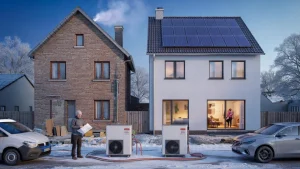
Klaus Weber still remembers the day his apartment building in Berlin got its smart heating system installed. What seemed like a simple upgrade turned into a three-week nightmare of coordination between electricians, plumbers, and tech specialists who couldn’t seem to speak the same language. “Everyone was pointing fingers at everyone else,” he recalls with a frustrated laugh. “The heating guy blamed the electrical team, the electrical team blamed the building management system, and nobody could figure out why my radiators were stone cold while my neighbor upstairs was sweating like it was summer.”
Klaus’s story isn’t unique. Across Germany, building projects are getting more complex every year, demanding seamless coordination between dozens of technical specialists. It’s exactly this challenge that has caught the attention of Europe’s fourth-largest construction company.
This French construction giant, Eiffage, has just made a strategic move that could reshape how buildings get built in Germany. Instead of just laying concrete and steel, they’re now betting big on the invisible systems that make modern buildings actually work.

Why This French Construction Giant Is Doubling Down on Germany
Eiffage isn’t exactly a household name, but with annual revenues exceeding €19 billion, this French construction giant has been quietly building some of Europe’s most impressive infrastructure for decades. From the Millau Bridge in France to major highway projects across the continent, they’ve earned their reputation the hard way.
Germany has always been on their radar, but until recently, Eiffage mostly showed up for the big-ticket items: bridges, major infrastructure, and heavy engineering projects. Now they’re making a completely different kind of play.

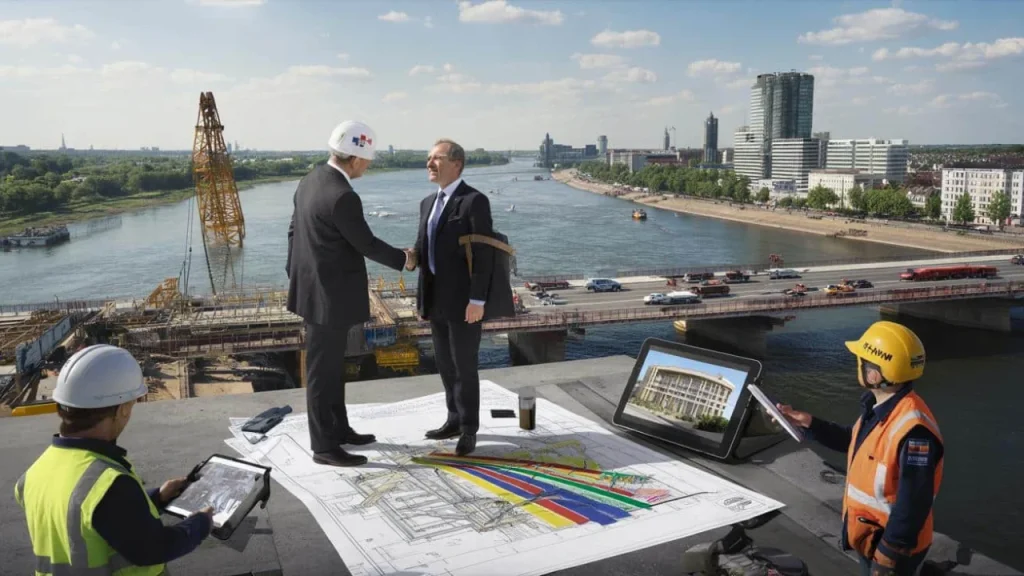
Through their German subsidiary Salvia, part of Eiffage Énergie Systèmes, they’ve acquired HTW Engineers, a respected German engineering firm that specializes in building services. The deal might not grab headlines like a skyscraper project, but industry insiders know it’s a game-changer.
“HTW Engineers gives Eiffage direct control over the brains and nervous system of modern buildings, not just their concrete skeleton,” explains one construction industry analyst who preferred to remain unnamed.

This acquisition transforms Eiffage from a foreign contractor dropping in for major projects to an integrated player with deep German roots and local engineering expertise.
What Makes HTW Engineers Worth Acquiring
HTW Engineers might not be a household name, but in Germany’s construction circles, they’ve built a rock-solid reputation since 1969. Here’s what caught Eiffage’s attention:
| Company Details | Specifications |
|---|---|
| Founded | 1969 |
| Annual Revenue | Approximately €10 million (2024) |
| Staff Count | Around 80 employees |
| Key Locations | Düsseldorf, Berlin, Leipzig |
| Primary Markets | Public and private sector clients |
What makes HTW Engineers particularly valuable isn’t their size but their specialization. They handle the complex technical systems that modern buildings depend on:
- Advanced water treatment and plumbing systems
- Sophisticated heating, ventilation, and air conditioning (HVAC)
- Complex electrical engineering and power distribution networks
- Integrated security, fire safety, and building control systems
- Building Information Modeling (BIM) for digital design coordination
“These aren’t the guys who just install your basic heating system,” notes a Berlin-based construction consultant. “They’re the specialists you call when a hospital needs a clean room HVAC system or when a data center requires precision cooling that can’t fail for even five minutes.”
How This Changes the German Construction Game
For decades, Germany’s construction industry has operated with clear divisions. Big international firms like this French construction giant would swoop in for major infrastructure projects, while local German companies handled the detailed building services work. Eiffage’s acquisition of HTW Engineers blurs those lines completely.
The timing couldn’t be better. Germany’s construction sector is undergoing massive changes driven by several factors:
- Strict new energy efficiency regulations requiring sophisticated building systems
- Digital transformation demanding integrated smart building technologies
- Aging infrastructure needing complex retrofitting solutions
- Growing demand for sustainable construction practices
“Previously, Eiffage would build the structure and then hand it over to local specialists for the technical systems,” explains a Munich-based industry observer. “Now they can control the entire process from foundation to final commissioning.”
This integration offers significant advantages. Instead of coordinating between multiple contractors who might have different standards, timelines, or communication styles, projects can now flow more smoothly under unified management.
What This Means for German Construction Workers and Companies
The acquisition sends ripples through Germany’s construction ecosystem in several directions. For HTW Engineers’ existing 80 employees, the deal likely means access to larger projects and international opportunities they couldn’t reach as an independent firm.
“Working with Eiffage’s resources behind us opens doors to projects we could only dream about before,” suggests one industry insider familiar with the deal.
For German construction companies, the landscape just got more competitive. This French construction giant now has local engineering expertise, German-speaking staff, and deep knowledge of local regulations. They’re no longer just the foreign contractor bidding on major infrastructure—they’re now equipped to compete for everyday commercial and residential projects.
Building owners and developers might be the biggest winners. Having a single contractor handle both structure and building services can mean faster project delivery, clearer accountability, and potentially lower costs through better coordination.
“When something goes wrong, there’s no finger-pointing between the structural contractor and the mechanical systems installer,” notes a Frankfurt developer who has worked with similar integrated contractors. “It’s all one team solving problems together.”
The Bigger Picture for European Construction
Eiffage’s move reflects broader trends reshaping European construction. As buildings become more complex and regulations more demanding, the old model of fragmented specialist contractors is giving way to integrated solutions.
This French construction giant isn’t just expanding geographically—they’re expanding vertically through the entire construction value chain. From initial design through final building commissioning, they can now handle projects without relying on external partners for critical technical systems.
The German market represents a particularly attractive testing ground. With Europe’s largest economy and some of its most demanding building standards, success in Germany often translates to opportunities across the continent.
“If you can navigate German building regulations and satisfy German engineering standards, you can work anywhere in Europe,” observes a Brussels-based construction industry consultant.
FAQs
What exactly does Eiffage do as a construction company?
Eiffage is Europe’s fourth-largest construction company by revenue, specializing in major infrastructure projects like bridges, highways, and large building projects across Europe.
Why is HTW Engineers important for Eiffage’s German strategy?
HTW Engineers provides specialized building systems expertise that allows Eiffage to handle complete projects rather than just structural work, making them more competitive in the German market.
How does this acquisition affect building costs in Germany?
The integration could potentially reduce costs by eliminating coordination problems between multiple contractors, though the full impact will depend on market competition.
What types of building systems does HTW Engineers specialize in?
They focus on HVAC systems, electrical engineering, plumbing, fire safety, security systems, and digital building management technologies.
Will this deal affect other construction companies in Germany?
Yes, it increases competition as Eiffage can now bid on a wider range of projects with integrated solutions rather than just major infrastructure contracts.
What does this mean for the future of European construction?
It signals a trend toward integrated construction companies that can handle everything from structure to complex building systems, potentially changing how major projects are delivered across Europe.