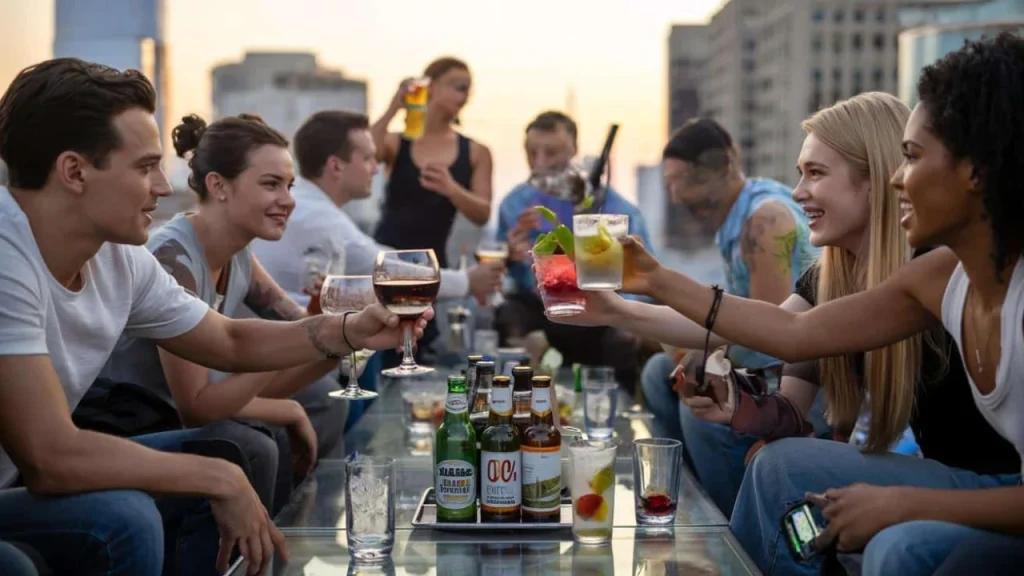

Sarah used to be the life of every party. Every Friday night, she’d rally her friends for drinks after work, leading the charge to the nearest bar. But last month, when her colleagues suggested their usual happy hour spot, Sarah surprised everyone—including herself. “Actually, I think I’ll just grab a coffee instead,” she said. Her friends stared, confused. Was Sarah sick? Going through something?
The truth is, Sarah isn’t alone. Across the globe, millions of people are quietly stepping away from alcohol, not because they have to, but because they want to. What seemed like individual choices are now revealing themselves as part of something much bigger—a worldwide shift that’s reshaping how we socialize, celebrate, and unwind.
This isn’t just about a few health-conscious millennials posting about “Dry January” on social media. The alcohol consumption decline is happening everywhere, from busy American cities to quiet Australian suburbs, and the numbers are starting to tell a remarkable story about changing human behavior.
The Data Doesn’t Lie—We’re Drinking Less
When researchers first noticed people drinking less, many assumed it was temporary. Maybe it was the economy, or health trends that would fade away. But the numbers keep dropping, year after year, in ways that suggest something fundamental has changed.
In the United States, the latest Gallup polling reveals something striking: only 54% of adults say they drink alcohol at all in 2025. That’s the lowest percentage recorded in almost 90 years. Just two years ago, in 2023, that number was 62%—meaning we’ve seen an 8% drop in just 24 months.

“The share of Americans who drink alcohol has fallen to its lowest point in around 90 years, and the trend is accelerating rather than stabilizing,” notes Dr. Michael Chen, a behavioral researcher at Northwestern University.
But it’s not just about who’s drinking—it’s about how much. Among Americans who still consume alcohol, the average person now has about 2.8 drinks per week. A few years back, that number was closer to four drinks weekly.
Australia tells a similar story, particularly among younger generations. Researchers at Flinders University focused on Generation Z (people born between 1997 and 2012) and found they’re far more likely to skip alcohol entirely compared to previous generations at the same age.
The United Kingdom has seen its own dramatic shift. Twenty years ago, the average person consumed the equivalent of about 14 drinks weekly. Today, that number has dropped to just over 10 drinks—a 30% decrease across an entire population.

Who’s Leading This Quiet Revolution
The alcohol consumption decline isn’t happening equally across all groups. Young adults are driving most of the change, but the reasons vary significantly depending on where you look.
Here’s what the data shows about different demographics:
- Gen Z (ages 12-27): Most likely to abstain completely or drink very occasionally
- Millennials (ages 28-43): Reducing consumption but not eliminating it entirely
- College students: Bucking decades of heavy drinking traditions
- Urban professionals: Choosing wellness-focused lifestyles over bar culture
- Women: Leading the “sober curious” movement in many countries
| Country | Alcohol Consumption Change (2020-2024) | Primary Age Group Affected |
|---|---|---|
| United States | -13% overall consumption | 18-34 years old |
| Australia | -18% among young adults | 18-25 years old |
| United Kingdom | -8% population-wide | 16-30 years old |
| Canada | -11% overall | 19-35 years old |
“Young people today have grown up with much more information about alcohol’s health effects than any generation before them,” explains Dr. Lisa Rodriguez, a public health specialist at the University of Toronto. “They’re making informed choices based on research their parents never had access to.”
But health concerns aren’t the only factor. Many young adults are discovering they simply have more fun without alcohol. They’re finding that sober socializing leads to deeper conversations, better sleep, more money in their pockets, and clearer thinking the next day.
What’s Actually Driving People Away From Alcohol
The reasons behind the alcohol consumption decline are more complex than simple health awareness. Multiple forces are converging to change how people think about drinking.
Mental Health Awareness: More people understand that alcohol can worsen anxiety and depression rather than help with these conditions. Social media has amplified conversations about mental health, making it easier for people to connect drinking with feeling worse, not better.
Wellness Culture: The rise of fitness tracking, meditation apps, and wellness influencers has made sobriety seem aspirational rather than restrictive. Being alcohol-free is now often seen as a sign of self-control and health consciousness.
Economic Pressures: Drinking is expensive. A night out that once cost $30 can easily reach $80-100 in many cities. Young adults facing student loans, high rent, and uncertain job markets are finding better uses for their money.
Social Media Influence: Platforms like TikTok and Instagram have created communities around sober living. Hashtags like #soberlife and #sobercurious have millions of views, showing people they’re not alone in questioning alcohol’s place in their lives.
“The stigma around not drinking has largely disappeared,” says Dr. Amanda Wright, a sociologist studying drinking patterns. “Twenty years ago, someone who didn’t drink at a party had to constantly explain themselves. Now, it’s often seen as the smart choice.”
Better Alternatives: The explosion in high-quality non-alcoholic beers, wines, and cocktails means people don’t have to choose between a sophisticated drink and staying sober. Bars are investing in creative mocktails, and even traditional breweries are creating alcohol-free versions.
How This Affects Everyone—Not Just Drinkers
The ripple effects of declining alcohol consumption extend far beyond individual health choices. Entire industries are scrambling to adapt, while social norms continue shifting in unexpected ways.
Restaurants and bars are redesigning their business models. Many now earn more from food and non-alcoholic beverages than from traditional drinks. Some establishments have gone completely alcohol-free, finding they attract health-conscious customers willing to spend money on premium mocktails and experiences.
Dating culture is evolving too. Coffee dates and hiking meetups are replacing bar crawls as preferred ways to get to know someone. Dating apps now include “sober” as a lifestyle choice, and many users specifically seek partners who don’t drink heavily.
Workplaces are changing their social dynamics. Company happy hours are becoming less common, replaced by team lunches, fitness challenges, or volunteer activities. The old tradition of bonding over drinks is giving way to more inclusive social options.
Even family gatherings are different. Holiday celebrations that once centered around alcohol are adapting to include family members who choose not to drink. This has led to more creative entertaining and often more meaningful connections.
“We’re seeing a fundamental shift in how people define fun and relaxation,” observes Dr. James Parker, who studies social trends at Yale University. “Alcohol is no longer seen as necessary for a good time, and that’s changing everything from birthday parties to business networking.”
The economic impact is substantial too. The global alcohol industry is worth hundreds of billions of dollars, and sustained declines in consumption are forcing major changes. Some companies are pivoting to non-alcoholic products, while others are doubling down on premium offerings for remaining drinkers.
FAQs
Why are young people drinking less alcohol than previous generations?
Young people today have better access to information about alcohol’s health effects, face different economic pressures, and are influenced by wellness culture and social media communities that promote sobriety.
Is this decline in alcohol consumption temporary or permanent?
Research suggests this represents a long-term behavioral shift rather than a temporary trend, as the changes have been consistent across multiple years and different countries.
Which countries are seeing the biggest drops in alcohol consumption?
Australia shows the largest decline among young adults at 18%, followed by the United States at 13% overall consumption, and the UK at 8% population-wide.
How is the alcohol industry responding to declining consumption?
Many companies are investing heavily in non-alcoholic alternatives, premium products for remaining consumers, and entirely new business models focused on experiences rather than just drinks.
Does drinking less alcohol actually improve mental health?
Studies consistently show that reducing alcohol consumption can improve sleep quality, reduce anxiety and depression symptoms, and enhance overall mental clarity and emotional stability.
What social activities are replacing traditional drinking culture?
People are increasingly choosing coffee dates, fitness activities, volunteer work, creative workshops, and outdoor adventures as ways to socialize and unwind without alcohol.