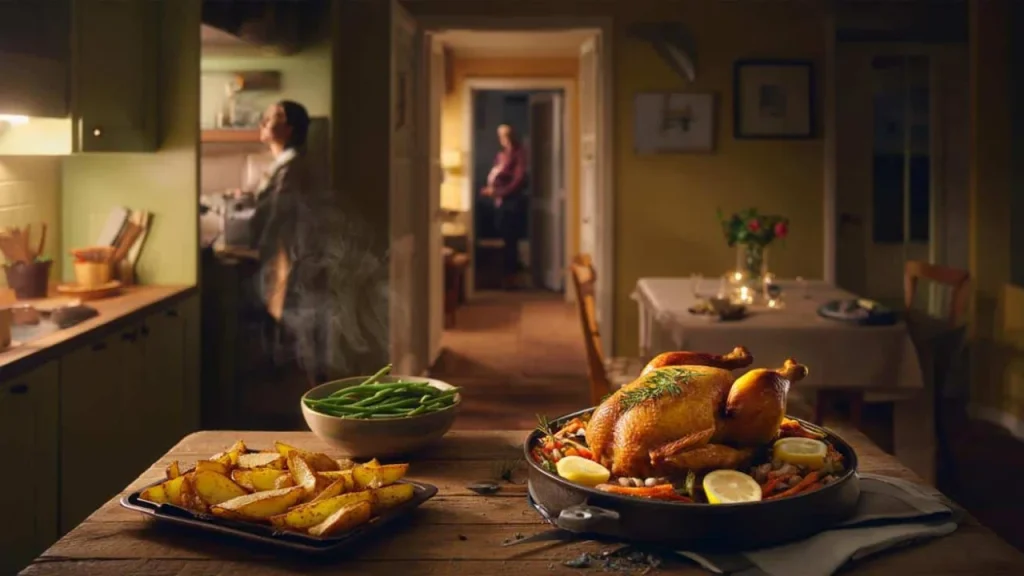

Last Tuesday, I stood in my kitchen staring at a whole chicken, feeling like I’d forgotten how to cook. Work had been brutal, the weather was dreary, and I was tired of ordering takeout that tasted like cardboard. Something in me craved the kind of meal my mom used to make on Sundays—simple, warm, filling.

So I rubbed that bird with butter, garlic, and thyme, surrounded it with vegetables, and slid it into the oven. Within thirty minutes, my entire apartment smelled like home. My upstairs neighbor texted me: “Whatever you’re cooking, my stomach is officially jealous.”
That’s the magic of a classic roast chicken. It doesn’t just feed you—it transforms your whole space into somewhere people actually want to be.

Why Classic Roast Chicken Never Goes Out of Style
A perfectly roasted chicken isn’t just dinner; it’s an event. The golden skin crackling in the oven, herbs perfuming every corner of your home, vegetables caramelizing alongside the bird—this is comfort food at its finest.
Classic roast chicken works because it’s foolproof and forgiving. You can dress it up with fancy herbs or keep it simple with salt, pepper, and lemon. Either way, you’ll get crispy skin, juicy meat, and enough leftovers for tomorrow’s lunch.

“There’s something deeply satisfying about roasting a whole chicken,” says chef Maria Santos, who’s been teaching home cooking for over fifteen years. “It connects us to traditional cooking methods while being completely achievable for busy families.”
The beauty lies in its simplicity. Unlike complicated recipes that require specialty ingredients, classic roast chicken uses what most people already have: butter, herbs, vegetables, and time.

Essential Elements for the Perfect Roast
Getting classic roast chicken right isn’t about following a fancy recipe—it’s about understanding the basics. Here’s what makes the difference between good and unforgettable:
- Room temperature chicken cooks more evenly than cold bird straight from the fridge
- Dry skin before seasoning ensures that coveted crispy exterior
- High heat start (450°F) then reduced temperature creates the best texture contrast
- Proper seasoning timing allows flavors to penetrate the meat
- Root vegetables underneath catch drippings and create natural gravy

The cooking method matters too. Many home cooks rush the process, but classic roast chicken rewards patience. Low and slow after that initial high-heat blast gives you tender meat that practically falls off the bone.
| Chicken Weight | Cooking Time | Internal Temperature | Resting Time |
|---|---|---|---|
| 3-4 lbs | 60-75 minutes | 165°F | 10-15 minutes |
| 4-5 lbs | 75-90 minutes | 165°F | 15-20 minutes |
| 5-6 lbs | 90-105 minutes | 165°F | 20-25 minutes |
“The biggest mistake people make is not letting the chicken rest,” explains cookbook author James Mitchell. “Those juices need time to redistribute, or you’ll lose all that moisture when you carve.”
What Makes This Dish So Special
Classic roast chicken hits different than other weeknight dinners. Maybe it’s the way the smell travels through your home, announcing dinner hours before it’s ready. Or how it brings people to the kitchen without being asked.
There’s science behind why this particular meal feels so comforting. The Maillard reaction—that browning process that happens when proteins and sugars meet high heat—creates hundreds of flavor compounds. Your brain recognizes these as “home cooking” smells that trigger feelings of safety and satisfaction.
But beyond the chemistry, classic roast chicken represents something deeper. It’s unhurried cooking in a hurried world. It’s the kind of meal that says you care enough to spend time on dinner, not just calories.
“When I teach people to roast chicken, they’re usually surprised by how hands-off it is,” says culinary instructor David Chen. “You prep it, put it in the oven, and mostly just wait. That waiting time often becomes family time.”
The leftovers tell their own story. Cold roast chicken makes better sandwiches than most deli meat. The bones simmer into rich stock. Even the drippings become gravy or salad dressing.
Making It Your Own
The beauty of classic roast chicken is how easily it adapts to your taste and schedule. Busy weeknight? Keep it simple with salt, pepper, and whatever herbs you have. Special occasion? Stuff the cavity with lemon and rosemary, or rub the skin with compound butter.
Some families swear by their grandmother’s paprika blend. Others never stray from lemon and thyme. The “classic” part isn’t about following one specific recipe—it’s about the technique and the ritual.
The vegetables roasting alongside can change with the seasons. Root vegetables in winter, summer squash when it’s warm, Brussels sprouts in fall. Each combination creates a completely different meal while using the same basic method.
“I’ve been making the same roast chicken for twenty years, but it never tastes exactly the same twice,” laughs home cook Sarah Williams. “That’s what keeps it interesting.”
Why We Keep Coming Back
In our age of meal kits and food delivery, taking the time to roast a whole chicken feels almost rebellious. It’s slow cooking in a fast world, analog dinner in a digital age.
But maybe that’s exactly why it matters. Classic roast chicken doesn’t just feed your body—it feeds something deeper. The smell that fills your home, the golden bird that emerges from the oven, the way people linger at the table afterward.
This isn’t Instagram food or trendy cuisine. It’s the kind of cooking that builds memories, the meal people remember from childhood and recreate for their own families.
And unlike so many foods that promise comfort but deliver disappointment, classic roast chicken always delivers. Every single time.
FAQs
How do I know when my roast chicken is done?
Use a meat thermometer inserted into the thickest part of the thigh—it should read 165°F. The juices should run clear, not pink.
Why is my chicken skin not crispy?
Pat the skin completely dry before seasoning, and start cooking at high heat (450°F) for the first 20 minutes to crisp the skin.
Should I stuff my chicken?
For food safety and even cooking, it’s better to put aromatics like lemon, herbs, or onions in the cavity rather than dense stuffing.
Can I cook vegetables with the chicken?
Absolutely! Root vegetables like potatoes, carrots, and onions roast beautifully alongside chicken and absorb all those delicious drippings.
How long should I let the chicken rest?
Let it rest for 10-20 minutes after cooking. This allows the juices to redistribute, ensuring moist, tender meat when you carve.
What’s the best way to reheat leftover roast chicken?
Reheat gently in a 325°F oven, covered with foil to prevent drying out. Add a splash of chicken broth if needed.