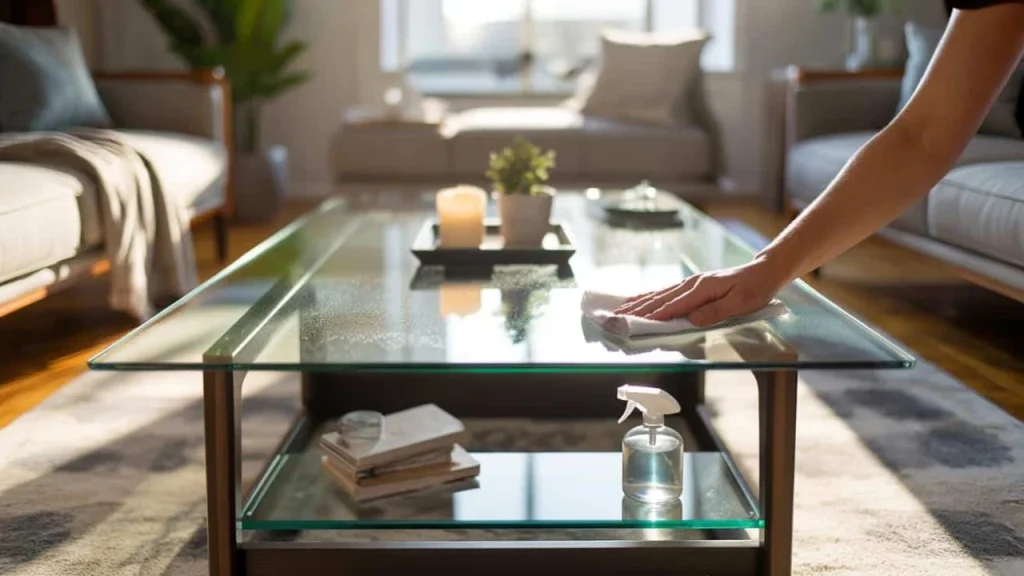

Last Thursday evening, I watched my neighbor Sarah frantically scrubbing her glass dining table minutes before her in-laws arrived. She’d spray, wipe, step back to admire her work, then notice another smudge glaring under the kitchen light. The cycle repeated four times before she threw the microfiber cloth down in defeat.

“I swear this table gets dirty just from looking at it,” she muttered, grabbing a paper towel instead.
If you own a glass table, you know exactly how Sarah felt. That pristine surface that looked so elegant in the showroom becomes a magnet for every fingerprint, water spot, and mysterious smudge the moment you bring it home.

Why Glass Tables Show Every Touch
Your glass table isn’t actually dirtier than other surfaces. It’s just brutally honest about what touches it. While wooden tables hide oils and smudges in their grain, glass puts everything on display like evidence under a microscope.
Every time someone touches the glass, skin oils called sebum transfer to the surface. These oils create tiny patches that catch and scatter light differently than the clean glass around them. When sunlight hits at the right angle, those patches become glaringly obvious fingerprints.

“Most people clean glass tables the same way they clean countertops, but glass needs a completely different approach,” explains professional housekeeper Maria Rodriguez, who’s been cleaning high-end homes for over 15 years. “The key isn’t cleaning harder—it’s cleaning smarter.”
The problem gets worse because we keep touching the same spots. The edge where people lean, the center where dishes get placed, the corners where hands naturally rest. These become permanent trouble zones that seem impossible to keep clean.

The Right Way to Clean Glass Tables
The secret to keeping glass tables fingerprint-free isn’t about cleaning more often. It’s about using the right technique and products to create a surface that resists oils in the first place.
Here’s what actually works:
- Use distilled water instead of tap water – Minerals in tap water leave residue that makes fingerprints more visible
- Clean in circular motions, then finish with straight lines – This prevents streaking and ensures even coverage
- Work in sections rather than the entire surface at once – Prevents cleaning solution from drying before you can wipe it off
- Use two cloths: one damp, one completely dry – The damp cloth removes oils, the dry cloth eliminates streaks
The most effective cleaning solution isn’t expensive commercial glass cleaner. Mix equal parts white vinegar and distilled water with a drop of dish soap. This combination cuts through oils while leaving behind a surface that naturally repels future fingerprints.
“I tell my clients to think of it like waxing a car,” says cleaning specialist James Chen. “You’re not just removing dirt—you’re creating a protective barrier.”
| Cleaning Method | Effectiveness | Fingerprint Resistance | Cost |
|---|---|---|---|
| Paper towels + commercial cleaner | Poor | Low | High |
| Microfiber cloth + water | Fair | Medium | Low |
| Vinegar solution + microfiber | Excellent | High | Very Low |
| Professional glass coating | Excellent | Very High | Medium |
Daily Habits That Keep Glass Tables Looking Perfect
The families with consistently clean glass tables don’t spend hours scrubbing. They’ve developed simple daily habits that prevent buildup before it starts.
Place coasters and placemats strategically, not just for hot items but for everything that touches the table. A smartphone, laptop, or even a book can leave marks. Keep a dedicated microfiber cloth nearby for quick touch-ups—one small wipe immediately after someone touches the glass prevents oils from setting.
Consider the lighting in your room. Glass tables look cleanest when lit evenly from above rather than with strong side lighting that creates dramatic shadows and highlights every imperfection.
“The smartest thing I ever did was put a thin glass protector on top of my dining table,” shares interior designer Rachel Kim. “It’s barely visible, but it takes all the abuse while the actual table stays pristine underneath.”
For households with kids or frequent entertaining, this double-layer approach can be a game-changer. The protective glass can be cleaned or even replaced without damaging the original table surface.
Some people swear by car wax applied sparingly to glass tables. A tiny amount buffed into the surface creates an invisible barrier that makes future cleaning effortless. The key word is sparingly—too much will leave a cloudy residue.
When Prevention Beats Cleaning
The most successful glass table owners focus on preventing fingerprints rather than constantly removing them. This means creating physical barriers, establishing house rules, and choosing accessories that work with the glass rather than against it.
Table runners, decorative trays, and strategic placement of everyday items can dramatically reduce direct contact with the glass surface. Instead of fighting the natural tendency to touch and lean, work with it by providing alternatives.
Professional cleaning services often recommend treating glass tables like smartphone screens. You wouldn’t constantly wipe your phone with random cloths and harsh chemicals—you’d use the right materials and gentle techniques to maintain the protective coating.
“The biggest mistake people make is thinking they need to deep clean their glass table every day,” notes cleaning expert David Park. “Once you establish the right baseline with proper products, maintenance becomes almost effortless.”
The truth is, a well-maintained glass table should need serious cleaning only once or twice a week. Daily life should require nothing more than a quick wipe with a clean, dry microfiber cloth.
FAQs
What’s the best homemade cleaner for glass tables?
Mix equal parts white vinegar and distilled water with one drop of dish soap. This cuts through oils and leaves a fingerprint-resistant surface.
Why do my glass tables always look streaky after cleaning?
You’re probably using tap water or paper towels. Switch to distilled water and microfiber cloths, and always finish with a completely dry cloth.
How often should I deep clean my glass table?
Once or twice a week for deep cleaning. Daily maintenance should just be a quick wipe with a dry microfiber cloth.
Can I use car wax on glass tables?
Yes, but very sparingly. A tiny amount buffed into the surface creates an invisible barrier that repels fingerprints and makes cleaning easier.
Should I avoid glass cleaners with ammonia?
Ammonia-based cleaners can leave residue that actually attracts more fingerprints. Stick with vinegar-based solutions or cleaners specifically designed for glass furniture.
What’s the biggest mistake people make cleaning glass tables?
Using the same technique as other surfaces. Glass needs circular motions followed by straight lines, and you must work in sections to prevent streaking.