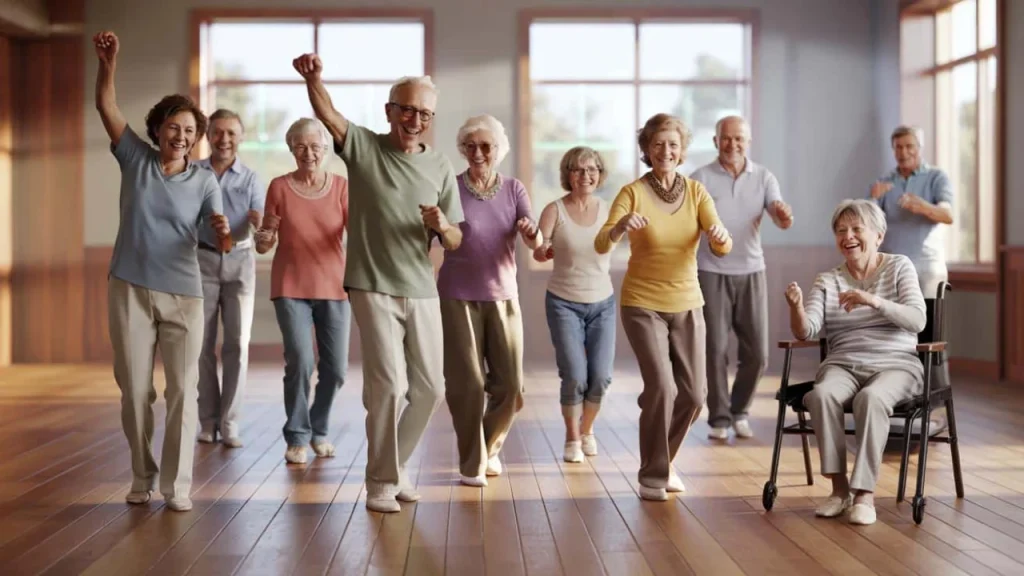

Margaret had always been sharp. At 68, she could still remember phone numbers from decades ago and never missed a birthday. But lately, something felt different. Names took longer to surface. She’d walk into rooms and forget why she came. Her daughter suggested crossword puzzles, maybe some brain training apps.

Instead, Margaret found herself in a community center on Tuesday mornings, learning line dancing with fifteen other seniors. “I felt ridiculous at first,” she laughs. “But after three months, I wasn’t just remembering the steps. I was remembering everything better.”
Margaret stumbled onto something researchers are calling the most effective memory-boosting activity for older adults. It’s not what you’d expect.
Why Dance Classes Beat Traditional Brain Training
When we think about keeping our minds sharp after 65, most of us picture solitary activities. Crossword puzzles over morning coffee. Chess games against the computer. Maybe those brain training apps our grandkids recommended.
But the most powerful memory-boosting activity happens in groups, with music, and yes – it makes you sweat a little. Dance classes, particularly those with changing choreography, are showing remarkable results for cognitive health in older adults.

Dr. Sarah Chen, a neurologist who studies aging, puts it simply: “When you’re learning dance steps, your brain is doing three jobs at once. You’re processing music, coordinating movement, and memorizing sequences. That’s like cross-training for your neurons.”
A groundbreaking German study followed 174 older adults for 18 months. Researchers divided them into different activity groups: some walked regularly, others did stretching and basic fitness routines. But one group took weekly dance classes that constantly introduced new choreography.

The results were striking. While all physical activity helped, the dancers showed the most significant improvements in memory, balance, and brain structure. Brain scans revealed their hippocampus – the brain region crucial for memory formation – had actually increased in volume.
What Makes Dancing So Powerful for Memory
Unlike traditional brain games that focus on one cognitive skill, dance classes create what neuroscientists call “cognitive complexity.” Here’s what’s happening in your brain during a typical session:

- Sequential memory: Learning and remembering step patterns in correct order
- Spatial awareness: Moving your body through space while staying in formation
- Rhythm processing: Synchronizing movements to musical beats
- Social coordination: Staying in sync with other dancers
- Dual-task performance: Executing movements while listening to instruction
- Error correction: Adjusting when you miss a step or fall behind
“It’s like your brain is juggling six balls at once,” explains Dr. Michael Rodriguez, who researches movement and cognition. “That constant challenge builds neural connections in ways that sitting at a puzzle table simply can’t match.”
The social element adds another layer of cognitive benefit. When you’re dancing with others, you’re reading social cues, maintaining eye contact, and adjusting your movements based on the group’s rhythm. This social processing exercises parts of the brain that decline with age.
| Activity Type | Cognitive Benefits | Physical Benefits | Social Benefits |
|---|---|---|---|
| Crossword Puzzles | Vocabulary, pattern recognition | None | None |
| Chess | Strategic thinking, planning | None | Limited |
| Dance Classes | Memory, coordination, multitasking | Balance, cardiovascular, flexibility | High interaction, team coordination |
| Walking Groups | Moderate | Cardiovascular | Conversation |
Real People, Real Results
The research is compelling, but the personal stories are what really drive the point home. Take Robert, a 74-year-old retired engineer who joined a ballroom dancing class after his wife passed away.
“I went for the social aspect,” he admits. “But after six months, I noticed I wasn’t losing my keys anymore. I could follow complex conversations better. My doctor was amazed at my balance tests.”
Carmen, 69, started with chair dancing due to arthritis in her knees. “People think chair dancing is easy, but learning those arm patterns while staying on beat? It’s harder than calculus,” she laughs. “My memory is sharper now than it was five years ago.”
The beauty of dance classes for memory improvement lies in their accessibility. You don’t need previous experience, special equipment, or even full mobility. Options exist for every fitness level:
- Line dancing: Perfect for beginners, focuses on footwork patterns
- Chair dancing: Upper body choreography for those with mobility limits
- Ballroom basics: Partner work adds social and coordination challenges
- Folk dancing: Cultural dances with repetitive but evolving patterns
- Gentle salsa: Rhythm-based movement without complex spins
The key is changing choreography. Classes that repeat the same routine week after week lose their cognitive punch. Your brain needs fresh challenges to build new neural pathways.
Getting Started: What to Expect
If you’re considering dance classes for memory benefits, here’s what researchers recommend. Start with beginner-friendly programs specifically designed for older adults. Many community centers, senior centers, and dance studios offer these classes.
“The first few weeks feel overwhelming,” admits dance instructor Lisa Park, who specializes in senior programs. “But I watch people transform. They go from struggling with basic steps to creating beautiful, complex routines. And yes, their mental sharpness improves dramatically.”
Don’t worry about looking foolish or keeping up perfectly. The cognitive benefits come from the challenge itself, not from flawless execution. Even when you miss steps or lose the rhythm, your brain is working hard to correct course.
Most programs meet once or twice weekly for 60-90 minutes. Classes typically include warm-up, instruction of new steps, practice time, and a cool-down with gentle stretching. The atmosphere is supportive, with everyone focused on learning rather than performing.
Cost varies by location, but most community programs range from $10-25 per session. Many insurance plans cover senior fitness activities, so check your benefits.
FAQs
Do I need dance experience to join senior dance classes?
Not at all. These classes are designed for complete beginners, with instructors who specialize in teaching older adults.
What if I have mobility issues or use a walker?
Many programs offer chair dancing or modified movements. The cognitive benefits come from learning patterns, not from complex footwork.
How quickly will I see memory improvements?
Most people notice sharper thinking within 6-8 weeks of regular attendance, though benefits can appear sooner.
Is dancing better than other physical activities for brain health?
Research suggests that dance classes with changing choreography provide unique cognitive benefits beyond regular exercise due to the complex mental processing required.
What type of dance is best for memory benefits?
Any style that involves learning new patterns regularly. Line dancing, ballroom basics, and folk dancing are popular choices for seniors.
Can I get similar benefits from dancing at home to videos?
While home practice helps, the social interaction and real-time instruction in group classes provide additional cognitive challenges that boost the memory benefits.