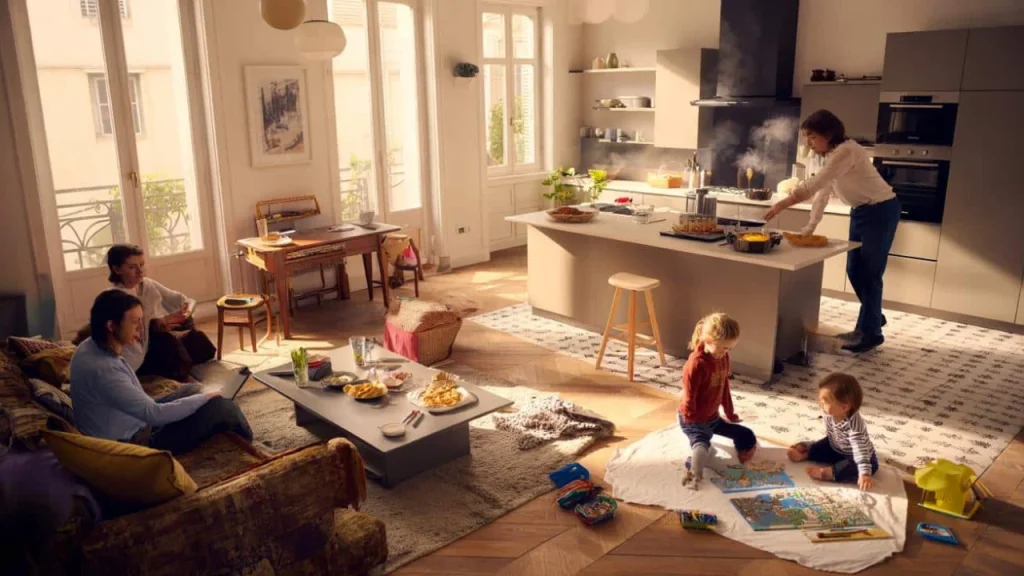

Sarah stares at her formal dining room set, the one she spent months choosing three years ago. The mahogany table gleams under the chandelier, surrounded by eight matching chairs that have hosted exactly four dinner parties. Meanwhile, her family of four crowds around the kitchen island every night, eating takeout off paper plates while homework spreads across the counter.
She’s not alone. Across the country, homeowners are questioning why they’re dedicating prime real estate to rooms that feel more like museums than living spaces. The traditional formal living room and separate dining room—once the gold standard of American home design—are quietly disappearing from new construction and renovation plans.
This isn’t just about changing tastes. It’s about how we actually live versus how we think we should live.

The Death of Formal Living Spaces
Walk through any new home development today, and you’ll notice something missing: those pristine, untouchable living rooms that our parents called “the good room.” Instead, you’ll find open floor plan living that connects kitchen, dining, and family areas into one flowing space.
“I see it every day,” says interior designer Maria Rodriguez, who’s been redesigning homes for fifteen years. “Clients come to me wanting to tear down walls between their formal dining room and kitchen because they never use that space. They want their homes to work for their actual lifestyle, not some fantasy dinner party they might throw once a year.”

The shift makes perfect sense when you look at how modern families actually function. Parents need to supervise homework while cooking dinner. Remote workers need flexible spaces that can transform from office to yoga studio to playroom. Young professionals want to entertain friends without disappearing into the kitchen for hours.
Open floor plan living delivers on all these needs by creating multifunctional spaces that adapt throughout the day. The same island that serves breakfast becomes a work desk by 9 AM, a craft station at 3 PM, and a cocktail bar by 7 PM.

What Homeowners Really Want Now
Today’s homebuyers consistently prioritize flexibility over formality. Real estate data shows some clear trends that explain why traditional living rooms are losing their appeal:
- Multi-purpose functionality – Rooms need to serve 3-4 different purposes throughout the day
- Better sight lines – Parents want to see children while cooking or working
- Easier entertaining – Hosts don’t want to be isolated in the kitchen during parties
- Maximized square footage – Removing walls makes spaces feel 30-40% larger
- Natural light flow – Open layouts distribute light throughout connected spaces
- Technology integration – Charging stations, wifi boosters, and smart home controls work better in central locations

| Traditional Layout | Open Floor Plan Living |
|---|---|
| Formal dining room used 2-3 times per year | Flexible eating areas used daily |
| Living room for special occasions only | Family room for everyday comfort |
| Kitchen isolated during cooking | Kitchen as central hub for family interaction |
| Multiple rooms requiring separate furniture sets | One cohesive space with versatile pieces |
| Wasted hallway and transition space | Every square foot serves multiple purposes |
“The formal living room was really about showing status,” explains residential architect Tom Chen. “But today’s homeowners care more about functionality than impressing visitors they rarely have over.”
How This Changes Everything About Home Design
This shift toward open floor plan living is reshaping everything from furniture sales to home values. Furniture stores report declining sales of formal dining sets while modular seating and kitchen islands fly off showroom floors.
Homebuilders have taken notice too. New construction increasingly features “great rooms” instead of separate living and dining areas. Even luxury homes are ditching formal parlors for larger, more flexible family spaces.
The renovation market tells the same story. Contractors report that wall removal between kitchens and adjacent formal rooms represents nearly 60% of their interior remodeling projects. These renovations typically increase home values by 10-15% while dramatically improving daily functionality.
But the impact goes beyond real estate. This trend reflects deeper changes in how we socialize and work. Remote work requires homes to accommodate office needs. Smaller family sizes mean less need for huge formal dining tables. Casual entertaining has replaced elaborate dinner parties.
“Twenty years ago, families gathered around the TV after dinner,” notes lifestyle researcher Dr. Jennifer Walsh. “Now they’re scattered across devices, doing homework, video calling grandparents, or working on side projects. They need spaces that can handle all of that simultaneously.”
The environmental benefits matter too. Open floor plan living typically requires less heating and cooling since air circulates more efficiently through connected spaces. Families also tend to use fewer lights when rooms flow together naturally.
For aging homeowners, open layouts provide better accessibility and safer navigation. Fewer doorways and corners mean easier movement for walkers or wheelchairs, while open sight lines help family members keep an eye on elderly relatives.
The Future of Home Living
This movement toward flexible, open living spaces shows no signs of slowing down. Virtual reality home tours reveal that buyers spend 40% less time viewing homes with traditional formal rooms compared to those with open layouts.
Smart home technology accelerates this trend by enabling easy room transformations. Lighting systems can instantly change a space from bright workspace to cozy lounge. Moveable walls and modular furniture let homeowners reconfigure layouts as needs change.
“We’re designing homes for how people actually live, not how magazines think they should live,” concludes architect Chen. “The result is spaces that feel more comfortable, work better for families, and adapt as lifestyles change.”
For anyone still clinging to their formal living room, consider this: when was the last time you actually sat in there? Your answer probably explains why open floor plan living has become the new standard for comfortable, functional homes.
FAQs
Does removing walls between rooms hurt home resale value?
Actually, it typically increases value by 10-15% since most buyers prefer open floor plans over formal separated rooms.
How do you create privacy in an open floor plan living space?
Use furniture placement, area rugs, different lighting levels, and decorative screens to define separate zones within the open space.
What about noise issues with open layouts?
Strategic use of soft furnishings, carpet, and sound-absorbing materials can minimize noise while maintaining the open feel.
Are there any downsides to open floor plan living?
Cooking smells travel more freely, and it can be harder to contain messes, but most families find the benefits far outweigh these minor inconveniences.
How much does it typically cost to remove walls and create an open layout?
Simple wall removal ranges from $1,000-$5,000, though structural changes requiring permits and engineering can cost significantly more.
Can older homes be converted to open floor plans?
Most can, but you’ll need an engineer to determine which walls are load-bearing and require special support before removal.