
Maria Santos had been staring at the same empty water bottle for ten minutes. Outside her apartment in Cape Town, the summer heat was unbearable, but the taps had been dry for three days straight. She wasn’t alone—millions of people around the world face similar moments of desperation as freshwater becomes increasingly scarce.
What Maria doesn’t know yet is that 600 meters beneath the frigid waters off Norway’s coast, engineers are preparing to deploy something that could change everything. It’s not another massive coastal plant that devours energy and crowds shorelines. Instead, it’s an underwater desalination plant that uses the ocean’s own power to create the freshwater our world desperately needs.
The Deep Sea Factory That Could Save Millions
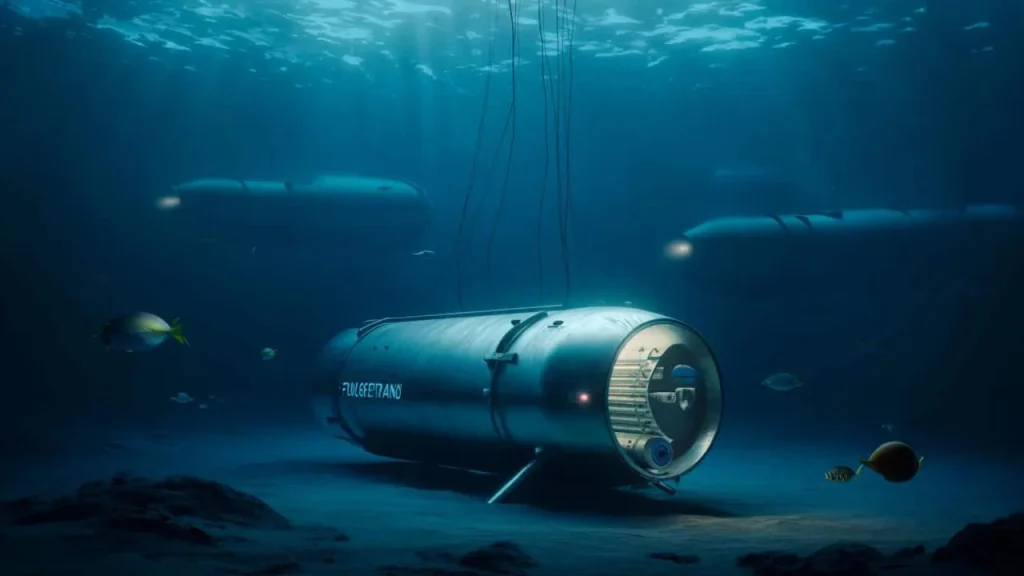
Picture a metal capsule roughly the size of a small ship, sitting in complete darkness on the ocean floor. This isn’t science fiction—it’s Flocean One, the world’s first fully operational underwater desalination plant, scheduled to begin operations in 2026 off Norway’s coast near Mongstad.

While traditional desalination facilities sprawl across expensive coastal real estate, consuming massive amounts of energy, this revolutionary approach flips everything upside down. The underwater desalination plant will operate between 300 and 600 meters below the surface, where crushing pressure, near-freezing temperatures, and absolute darkness become advantages rather than obstacles.
“Instead of fighting the sea with pumps, filters and concrete, we’re using the sea itself as our main piece of equipment,” explains the engineering team behind the project. TIME magazine has already recognized this breakthrough, listing Flocean among its top innovations of 2025.
How Nature Does the Heavy Lifting
Traditional desalination plants are energy monsters. They force seawater through ultra-fine membranes at enormous pressure using industrial pumps that guzzle electricity—often generated by fossil fuels. But what if the ocean could provide that pressure for free?
At depths of 300-600 meters, water pressure reaches levels that would normally require massive mechanical systems to achieve. The underwater desalination plant harnesses this natural force, dramatically reducing energy consumption by 30-50% compared to shore-based facilities.

Here’s how the deep-sea advantage works:
- Ocean pressure at depth replaces energy-hungry pump systems
- Cold, dark water contains fewer biological contaminants
- Reduced mechanical equipment means lower maintenance costs
- No coastal land requirements eliminate real estate expenses
- Marine ecosystems face less disruption from surface operations

The cold, dark environment also solves another major headache for desalination operators. Sunlit shallow waters team with algae, plankton, and marine organisms that clog filters and membranes. Deep underwater, biological activity drops dramatically, meaning cleaner input water and longer-lasting equipment.
Key Technical Specifications
| Feature | Underwater Plant | Traditional Coastal Plant |
|---|---|---|
| Operating Depth | 300-600 meters | Sea level |
| Energy Reduction | 30-50% less | Baseline |
| Pressure Source | Natural ocean pressure | Industrial pumps |
| Biological Contamination | Minimal | High (algae, marine life) |
| Land Requirements | Zero | Large coastal areas |
Why This Matters for Everyone
Water scarcity affects over 2 billion people worldwide, and that number is growing. Climate change, population growth, and pollution are turning freshwater into liquid gold. Countries from Australia to California spend billions on desalination, but current technology is expensive and environmentally challenging.
The underwater desalination plant concept could democratize access to clean water. Coastal nations without expensive infrastructure could potentially deploy these systems offshore, avoiding the massive land and energy costs of traditional facilities.
“This technology opens up possibilities for island nations and developing coastal communities that simply couldn’t afford conventional desalination,” notes a water technology analyst following the project. “You’re talking about potentially game-changing access to freshwater.”
The environmental benefits extend beyond energy savings. Traditional coastal plants often discharge hot, salty brine back into shallow waters, creating “dead zones” that harm marine life. Underwater systems can disperse this waste more naturally across deep-ocean currents, reducing ecological impact.
Real-World Applications on the Horizon
Norway’s deployment is just the beginning. The success of Flocean One could trigger a wave of similar projects worldwide. Small island nations in the Caribbean and Pacific, which currently rely on expensive imported water or energy-intensive coastal plants, represent prime candidates for underwater desalination technology.
Offshore wind farms present another intriguing opportunity. These installations already have underwater infrastructure and could potentially incorporate desalination capabilities, creating dual-purpose ocean facilities that generate both clean energy and fresh water.
“We’re looking at a future where the deep ocean becomes humanity’s freshwater factory,” explains a maritime engineering expert. “The same depths we’ve barely explored could hold the key to solving one of our most pressing resource challenges.”
The economic implications are substantial. Reducing energy costs by 30-50% while eliminating land acquisition expenses could make desalinated water affordable for communities currently priced out of the market. This technology might finally bring large-scale freshwater production to regions that need it most.
As 2026 approaches, all eyes will be on the Norwegian coast. If Flocean One proves successful, underwater desalination plants could transform from experimental technology into essential infrastructure, bringing hope to water-stressed communities around the globe.
FAQs
How does an underwater desalination plant work differently from land-based ones?
It uses natural ocean pressure at depth to force seawater through membranes, eliminating the need for energy-intensive pumps that traditional plants require.
Is underwater desalination more environmentally friendly?
Yes, it reduces energy consumption by 30-50% and disperses waste brine more naturally through deep-ocean currents, minimizing ecological impact.
How much freshwater can these underwater plants produce?
Flocean One is designed for industrial-scale production, though specific capacity figures haven’t been publicly released ahead of the 2026 launch.
Could this technology work in other locations besides Norway?
Absolutely. Any coastal region with sufficient water depth could potentially deploy similar systems, making it particularly valuable for island nations and developing countries.
What happens if the underwater equipment needs maintenance?
The systems are designed for remote operation with minimal maintenance needs, though specialized underwater robotics would handle any necessary repairs.
How much will water from underwater desalination plants cost?
While exact pricing isn’t available, the 30-50% energy savings and elimination of land costs should significantly reduce production expenses compared to traditional methods.