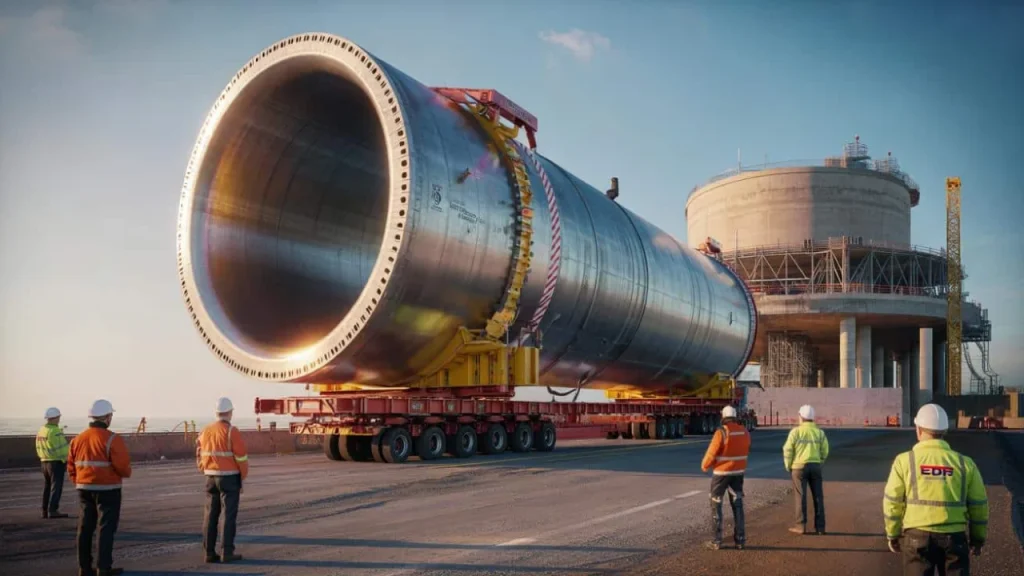

Picture this: somewhere in the French countryside, a truck convoy is making its way through narrow roads, carrying something that weighs as much as 300 cars combined. The locals barely glance up from their morning coffee, but what’s rolling past their windows will power millions of British homes for the next eight decades.

This isn’t just any delivery. It’s a 500-tonne steel giant that represents one of the most ambitious energy projects in Europe, and it’s heading straight for the Somerset coast where Hinkley Point C is taking shape.
The journey from rural France to windswept England tells a bigger story about energy security, international cooperation, and Britain’s massive bet on nuclear power at a time when the lights need to stay on.
What Makes This Steel Cylinder Worth Billions
On November 28th, 2025, French nuclear specialist Framatome put the finishing touches on something extraordinary: the reactor pressure vessel for Hinkley Point C’s Unit 2. This isn’t your average piece of industrial equipment.
Standing 13 metres tall and weighing around 500 tonnes, this forged steel cylinder will become the beating heart of Britain’s newest nuclear reactor. Inside this metallic fortress, uranium fuel will split atoms, release tremendous heat, and ultimately keep the lights on for up to six million British homes.

“This vessel represents years of precision engineering,” explains a senior nuclear engineer familiar with the project. “Every millimetre matters when you’re building something that needs to safely contain nuclear reactions for 80 years.”
The numbers behind Hinkley Point C are staggering. Once both reactors are operational, they’ll generate about 7% of the UK’s total electricity demand. That’s enough clean energy to replace several gas-fired power stations and significantly reduce Britain’s carbon emissions.
But this steel giant isn’t just big – it’s built to withstand conditions that would destroy most materials. Think temperatures around 300°C, pressures exceeding 150 times normal atmospheric pressure, and decades of intense neutron radiation that would turn ordinary steel into brittle scrap.
The Technical Marvel Behind Britain’s Energy Future
The reactor pressure vessel represents the pinnacle of nuclear engineering. Manufactured at Framatome’s Saint-Marcel facility near Chalon-sur-Saône, every aspect of its construction has been meticulously planned and executed.

| Specification | Details |
|---|---|
| Weight | 500 tonnes |
| Height | 13 metres |
| Operating Temperature | 300°C |
| Operating Pressure | 150+ bar |
| Design Lifespan | 80 years |
| Power Output Capacity | 1,600 MW per reactor |
The manufacturing process alone is a testament to human ingenuity. The vessel starts as massive steel forgings that are shaped, machined, welded, and tested to tolerances measured in fractions of millimetres. Every weld is X-rayed, every surface inspected, every dimension verified multiple times.
“We’re not just building a container,” notes a Framatome spokesperson. “We’re creating a precision instrument that will safely harness one of the most powerful forces in nature.”
The vessel features dozens of precisely positioned nozzles where cooling pipes will connect, control rod mechanisms will insert, and monitoring equipment will track every aspect of the reactor’s operation. Each opening is engineered to maintain the vessel’s structural integrity while allowing essential systems to function.
Why This French Delivery Matters for British Energy
This second pressure vessel arrival marks a crucial milestone for Hinkley Point C, but it also represents something bigger: Britain’s long-term energy strategy taking physical form.
The UK faces an energy crunch. Aging nuclear plants are closing, gas prices remain volatile, and renewable sources like wind and solar need backup power for when the weather doesn’t cooperate. Hinkley Point C is designed to provide that reliable, carbon-free baseload power for decades to come.
“Nuclear power isn’t just about keeping the lights on today,” explains an energy policy expert. “It’s about ensuring we have clean, reliable electricity for our children and grandchildren.”
The project’s impact extends far beyond electricity generation:
- Creates thousands of jobs during construction and hundreds of permanent positions
- Reduces UK carbon emissions by 9 million tonnes annually
- Provides energy security independent of volatile global gas markets
- Supports the UK’s net-zero commitments through reliable clean power
- Demonstrates post-Brexit cooperation between Britain and European partners
The timing couldn’t be more critical. With the first reactor pressure vessel already installed in Unit 1 and now the second vessel ready for Unit 2, Hinkley Point C is moving from ambitious plan to operational reality.
From French Factory Floor to British Power Grid
The journey of these pressure vessels tells a fascinating story of international industrial cooperation. Despite Brexit tensions and political changes, French and British engineers have continued working together to deliver this massive project.
The first pressure vessel, manufactured at Le Creusot, arrived in Somerset in early 2023 and was successfully installed in December 2024. Now, with the second vessel complete, the installation process will repeat – a carefully choreographed dance of cranes, precision positioning, and system integration.
“Watching these installations is like watching precision surgery on an industrial scale,” describes a construction supervisor at the site. “Every movement is planned, every connection verified, every system tested before we move to the next step.”
The vessels represent just one part of the complex EPR (European Pressurised Reactor) technology that makes Hinkley Point C a Generation III+ nuclear plant. This advanced design includes multiple safety systems, improved efficiency, and enhanced security features compared to older reactor designs.
Once operational, each reactor will generate 1,600 megawatts of electricity – enough to power cities the size of Birmingham. The reliable, 24/7 nature of nuclear power means this electricity flows regardless of weather conditions, time of day, or seasonal variations.
FAQs
When will Hinkley Point C start generating electricity?
The first reactor is expected to begin operations in the late 2020s, with the second reactor following approximately a year later.
How long will these reactor pressure vessels last?
They’re designed for an 80-year operational lifespan, making them some of the longest-lasting energy infrastructure in Britain.
How much electricity will Hinkley Point C produce?
Both reactors together will generate 3,200 MW, supplying about 7% of the UK’s electricity demand and powering approximately 6 million homes.
Why are the pressure vessels made in France?
France has specialized expertise in nuclear pressure vessel manufacturing through companies like Framatome, with decades of experience and unique heavy forging capabilities.
How safe are these reactor pressure vessels?
They’re built to withstand extreme conditions including earthquakes, floods, and even aircraft impacts, with multiple backup safety systems and continuous monitoring throughout their operational life.
What happens to the pressure vessels after 80 years?
At the end of their operational life, they’ll be safely decommissioned using established nuclear waste management procedures, with some materials potentially recyclable for future use.