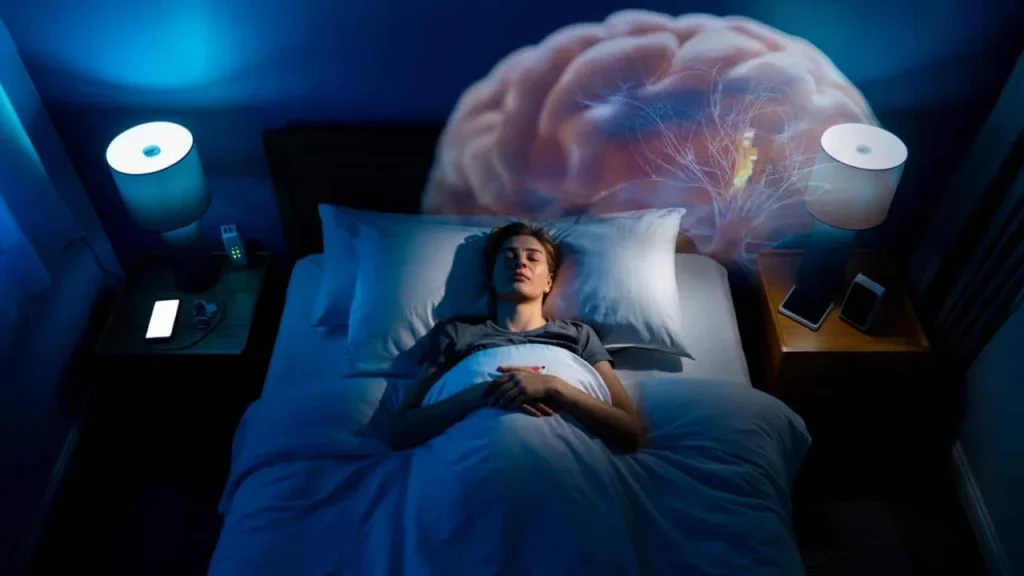

Sarah used to sleep with her phone charging next to her pillow, the soft blue glow keeping her company through restless nights. She told herself the light was comforting, a tiny beacon in the darkness that made her feel less alone. What she didn’t know was that this seemingly innocent habit was slowly rewiring her brain in ways that would affect her mood, memory, and mental health for months to come.

After years of poor sleep and mounting anxiety, Sarah decided to try something her grandmother had always sworn by: sleeping in complete darkness. She covered every LED, unplugged every device, and invested in blackout curtains. The change didn’t happen overnight, but within weeks, something remarkable occurred. Her mind felt clearer, her mood more stable, and for the first time in years, she woke up feeling truly rested.
Sarah’s experience isn’t unique. Millions of people are discovering that sleeping in complete darkness isn’t just about better rest—it’s about protecting their brain and mental health in ways science is only beginning to understand.

How Light Sabotages Your Sleep and Mental Health
Every night, your bedroom lighting quietly negotiates with your brain, and the outcome shapes your mood, memory, and resilience more than you might imagine. For years, that glowing TV or soft nightlight felt harmless, even comforting. New research reveals a very different story about what happens when artificial light invades your sleep.
Many people drift off with background illumination—a hallway lamp, a phone charger indicator, streetlight creeping through blinds. These sources feel trivial, but scientists say they’re anything but harmless.

Research from Monash University shows that even modest light exposure during sleep disrupts melatonin production, the hormone that signals your body that night has truly begun. When melatonin levels drop, your journey into deep sleep becomes slower and less stable.
“Light at night essentially tells the brain that daytime isn’t over yet, leaving your biological clock confused and your sleep less restorative,” explains Dr. Matthew Reid, a sleep researcher specializing in circadian rhythms.

A comprehensive review published in the Annals of Medicine linked artificial nighttime lighting to broader health consequences. Chronic light exposure throws off your circadian rhythm—the internal 24-hour clock that coordinates sleep, hormones, body temperature, and metabolism.
The Hidden Costs of Sleeping with Light
When your internal clock drifts out of sync, multiple health risks emerge. The effects cascade through your body and mind in ways that might surprise you:

- Increased difficulty falling asleep and staying asleep throughout the night
- Higher likelihood of metabolic disruptions, including weight gain and insulin resistance
- Elevated rates of mood disturbances, anxiety, and depressive symptoms
- Persistent feelings of being “jet-lagged” despite never traveling
- Weakened immune system response
- Impaired cognitive function and memory consolidation
The brain processes information differently when exposed to light during sleep hours. Instead of cycling through the crucial stages of deep sleep where memory consolidation and emotional processing occur, your mind remains partially alert, scanning for potential threats or stimulation.
| Sleep Environment | Melatonin Production | Deep Sleep Quality | Mental Health Impact |
|---|---|---|---|
| Complete Darkness | Optimal | High | Positive |
| Dim Light (TV/Phone) | Reduced by 30% | Moderate | Mixed |
| Moderate Light | Reduced by 60% | Poor | Negative |
| Bright Light | Severely Suppressed | Very Poor | Significantly Negative |
The Brain-Boosting Power of Complete Darkness
Recent studies reveal what happens when people embrace sleeping in complete darkness, and the results are compelling. Research published in 2025 found that darker bedrooms consistently correlate with lower depression rates and improved mental health markers.
People sleeping in the darkest environments report more stable moods, fewer intrusive nighttime thoughts, and stronger daytime energy. The connection appears robust across different age groups and lifestyles.
“The darker the bedroom, the lower the rates of depression and the more robust the markers of mental well-being,” notes Dr. Amanda Chen, a neuroscientist studying sleep and mood disorders. “We’re seeing measurable improvements in cognitive function, emotional regulation, and stress resilience.”
Complete darkness allows your brain to enter deeper sleep phases more efficiently. During these stages, your mind processes the day’s experiences, consolidates memories, and literally cleans itself of metabolic waste products that accumulate during waking hours.
The benefits extend beyond mental health. People who sleep in complete darkness often experience:
- Enhanced memory formation and recall
- Improved emotional stability and stress management
- Better focus and concentration during the day
- Stronger immune system function
- More efficient metabolism and appetite regulation
- Reduced inflammation markers throughout the body
Making the Switch: Practical Steps for Darker Sleep
Transitioning to sleeping in complete darkness doesn’t require expensive equipment or drastic lifestyle changes. Small adjustments can yield significant benefits for your mental health and cognitive function.
Start by identifying every light source in your bedroom. This includes obvious culprits like TVs and phones, but also subtle ones like alarm clock displays, power strips with indicator lights, and electronic devices on standby mode.
“Many people don’t realize how much ambient light they’re exposed to until they actively try to eliminate it,” explains sleep specialist Dr. James Martinez. “Even a small LED can disrupt melatonin production more than most people expect.”
Cover or unplug unnecessary electronics, invest in blackout curtains or an eye mask, and consider using tape to block small indicator lights. The goal is creating an environment so dark you can’t see your hand in front of your face.
Some people worry about safety or feel anxious in complete darkness. These concerns are normal and often diminish as your brain adapts to the new environment. Keep a small flashlight nearby for emergencies, but resist the urge to check your phone or turn on lights during the night.
FAQs
How long does it take to see benefits from sleeping in complete darkness?
Most people notice improved sleep quality within 1-2 weeks, with mental health benefits becoming apparent after 3-4 weeks of consistent practice.
Is it safe to sleep in complete darkness?
Yes, sleeping in complete darkness is safe for most people and can actually improve safety by promoting deeper, more restorative sleep.
What if I need to get up during the night?
Keep a small flashlight or red-tinted nightlight nearby for bathroom trips, but avoid bright white lights that can disrupt your circadian rhythm.
Can I use a sleep mask instead of blackout curtains?
Sleep masks can be effective, though some people find them uncomfortable. Combining blackout curtains with a comfortable mask often provides the best results.
Will sleeping in darkness help with depression and anxiety?
Research suggests that complete darkness during sleep can improve mood regulation and reduce symptoms of depression and anxiety, though it should complement, not replace, professional mental health care.
Do I need to eliminate all light sources?
Even small amounts of light can impact sleep quality, so aim for as much darkness as possible. Start with the biggest sources and work your way down to smaller ones.