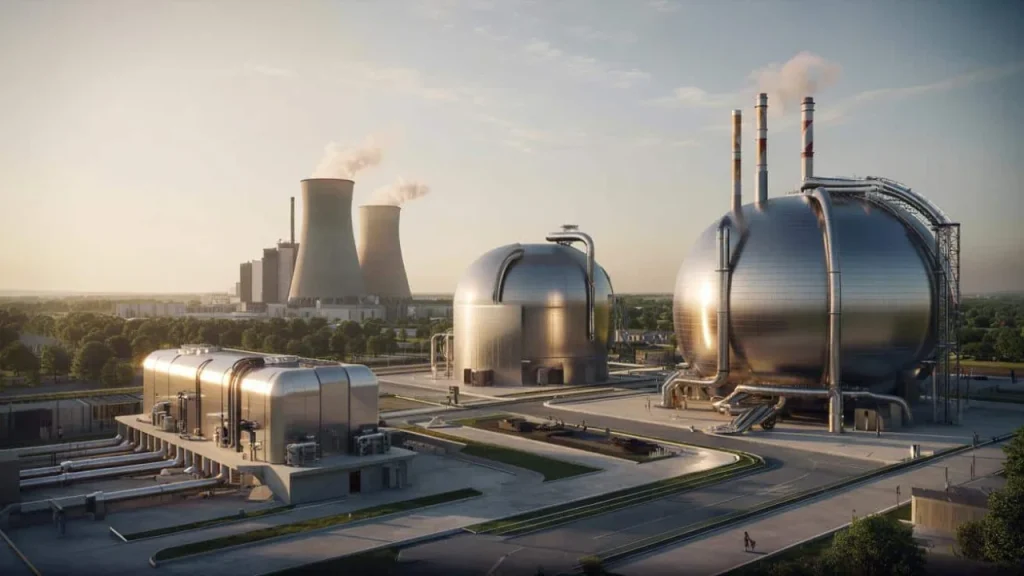

Marie Dubois still remembers the day her grandfather took her to see the massive cooling towers of the Bugey Nuclear Plant near Lyon. She was eight years old, craning her neck to look up at those concrete giants that seemed to touch the clouds. “That’s where France gets its power,” he told her with obvious pride.

Twenty-five years later, Marie works as an energy analyst in Paris, and those same aging reactors her grandfather showed her are nearing retirement. But something remarkable is happening in French nuclear power that would have amazed the old engineer. Instead of one massive state company building enormous reactors, three nimble startups are racing to get their small, innovative designs approved by safety authorities.
For the first time in decades, France isn’t just maintaining its nuclear dominance—it’s completely reinventing how nuclear power works.

The New Wave of French Nuclear Innovation
French nuclear power has always been about doing things big. Massive reactors, massive investments, massive timelines. But in the past few weeks, three companies have shattered that mold by submitting cutting-edge reactor designs to France’s nuclear safety authority.
Newcleo, Stellaria, and Jimmy Energy represent something unprecedented in the French nuclear sector. Each company brings a different approach to nuclear technology, but together they signal that France is entering what many experts are calling a “golden age” of nuclear innovation.

“We’re witnessing the most significant shift in French nuclear strategy since the 1970s,” says Dr. Antoine Mercier, a nuclear policy researcher at Sciences Po. “These aren’t incremental improvements—they’re completely new ways of thinking about nuclear power.”
The timing isn’t coincidental. As France grapples with an aging nuclear fleet and ambitious climate targets, these smaller, more flexible reactors offer solutions that traditional large-scale plants simply can’t match.
Breaking Down the Three Game-Changers
Each company has taken a different regulatory path, showing just how diverse the new nuclear landscape has become. Here’s what makes each approach unique:
| Company | Reactor Type | Key Innovation | Regulatory Status |
|---|---|---|---|
| Newcleo | Lead-cooled fast reactor | Uses liquid lead instead of water for cooling | Safety programme submitted |
| Stellaria | Small modular reactor | Factory-built, standardized design | Full authorization request filed |
| Jimmy Energy | Industrial microreactor | Designed for industrial heat applications | Full authorization request filed |
The regulatory differences matter enormously. Newcleo’s voluntary safety programme allows for ongoing design refinements while maintaining dialogue with regulators. Meanwhile, Stellaria and Jimmy Energy have filed full Creation Authorization Requests (DAC), which locks in their designs but moves them closer to actual construction permits.
“Filing a DAC is like proposing marriage,” explains nuclear licensing expert Claire Rousseau. “You’re committing to a specific design and taking on full legal responsibility as a nuclear operator.”
What makes these submissions particularly exciting is their diversity:
- Newcleo’s lead-cooled design operates at much higher temperatures than traditional reactors, making it more efficient and safer
- Stellaria focuses on mass-producible modules that can be factory-built and shipped to sites
- Jimmy Energy targets industrial customers who need high-temperature heat for manufacturing processes
Why This Matters for France and Beyond
The implications of these developments stretch far beyond nuclear engineering textbooks. French nuclear power has always been a source of national pride, providing roughly 70% of the country’s electricity while keeping carbon emissions low.
But the current fleet faces serious challenges. Most reactors were built in the 1980s and will need replacement within the next two decades. Traditional large reactors take 10-15 years to build and cost billions of euros each.
These new reactor designs offer a completely different value proposition. They’re smaller, faster to build, and can serve markets that large reactors can’t touch. Jimmy Energy’s microreactor, for example, could provide carbon-free heat to steel mills, chemical plants, and data centers.
“We’re not trying to replace large reactors entirely,” says Stellaria CEO Thomas Lefevre. “We’re opening up entirely new applications for nuclear energy that weren’t economically viable before.”
The global implications are enormous. France has historically been a major exporter of nuclear technology, and these new designs could position the country as a leader in the next generation of nuclear power. Countries looking for clean energy solutions but lacking the infrastructure for massive nuclear plants could find these smaller reactors much more attractive.
For French taxpayers, the shift could mean more competition and innovation in a sector long dominated by state-owned giants. It could also mean faster deployment of clean energy and new high-tech jobs in emerging nuclear technologies.
The environmental benefits are equally compelling. These advanced reactors promise higher efficiency, better safety systems, and the ability to use recycled nuclear fuel. Some designs can even burn existing nuclear waste as fuel, helping solve one of the industry’s most persistent challenges.
The Road Ahead Won’t Be Simple
Despite the excitement, significant hurdles remain. Nuclear regulation is deliberately slow and thorough, meaning these companies face years of technical reviews before any reactors actually operate.
Public acceptance presents another challenge. While France generally supports nuclear power more than most countries, new reactor designs will need to prove themselves safe and reliable. The companies will also need to demonstrate that their business models work in the real world.
Financing represents perhaps the biggest obstacle. Even small reactors require substantial upfront investment, and investors remain cautious about nuclear projects given the industry’s history of cost overruns and delays.
“The technology is promising, but the commercial viability still needs to be proven,” warns energy economist Dr. Sophie Martin. “These companies need to show they can build and operate reactors profitably, not just design them elegantly.”
Competition from renewable energy continues to intensify as well. Solar and wind power costs have plummeted, making nuclear power’s value proposition more challenging to defend on purely economic grounds.
FAQs
What makes these new reactors different from traditional French nuclear plants?
They’re much smaller, faster to build, and designed for specific applications like industrial heat rather than just electricity generation.
How long will it take for these reactors to actually operate?
The regulatory approval process typically takes 3-5 years, followed by construction time, so the earliest operational dates would likely be in the early 2030s.
Are these reactors safer than current nuclear plants?
They incorporate advanced safety features and passive cooling systems, but they’ll need to prove their safety through extensive testing and regulatory review.
Will this affect electricity prices for French consumers?
Initially, these reactors will target specialized markets, but increased competition could eventually benefit consumers through more diverse energy options.
Can these reactors use existing nuclear fuel?
Some designs, particularly fast reactors like Newcleo’s, can actually burn recycled fuel and even existing nuclear waste.
What happens to France’s existing nuclear fleet?
These new reactors complement rather than replace the existing fleet, though they may eventually take over as older plants retire.