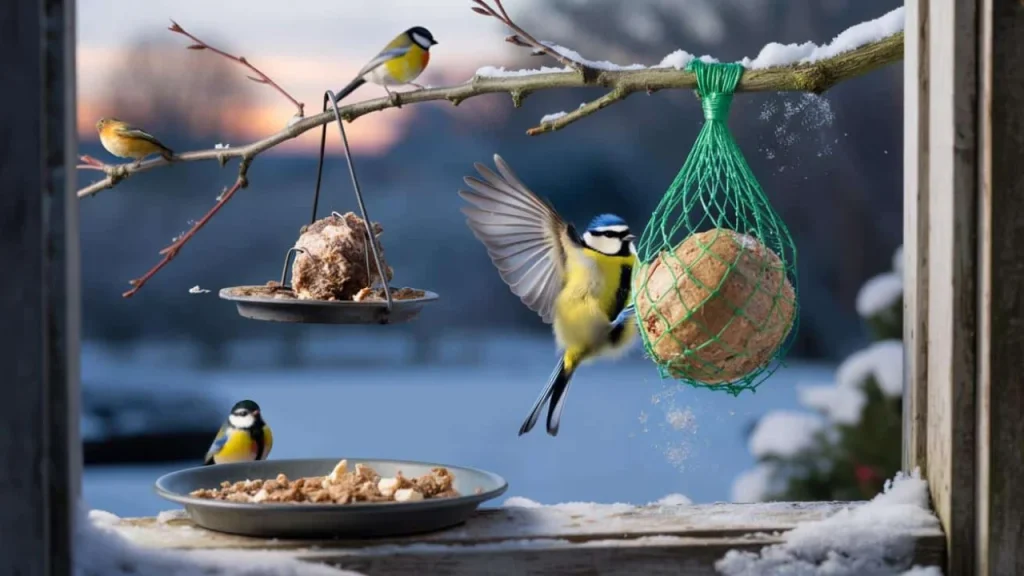

Last winter, Sarah noticed a blue tit hanging upside down from her carefully placed fat ball feeder. At first, she thought the bird was just feeding in an unusual position. But as minutes passed, she realized something was terribly wrong.

The tiny bird was trapped, one delicate claw caught in the plastic mesh surrounding the fat ball. Despite frantic wing beats and desperate struggles, it couldn’t break free. What started as Sarah’s attempt to help local wildlife through the harsh winter months had become a death trap hanging right outside her kitchen window.
This scene plays out in gardens across the country every winter, yet most of us remain completely unaware of the danger lurking in our well-intentioned winter bird feeding efforts.

The Hidden Danger in Every Garden Center Aisle
When temperatures plummet, garden centers and supermarkets stock their shelves with convenient fat ball feeders. These pre-packaged solutions promise to deliver high-energy nutrition to hungry birds with minimal effort from homeowners. Just hang them up and watch the wildlife flock to your garden.
But there’s a deadly detail most shoppers never consider. Those bright plastic nets that hold the fat balls together aren’t designed with bird safety in mind. They’re engineered for human convenience, warehouse storage, and shelf appeal.
“We see injured birds from these feeders regularly throughout winter,” explains wildlife rehabilitator Emma Chen. “The plastic mesh creates the perfect trap for small bird claws and feet.”
The problem lies in the mesh size and material. The gaps are just wide enough for a bird’s claw to slip through, but too narrow for easy escape. When birds land and try to grip the feeder, their claws can become wedged in the plastic loops.

What Really Happens When Birds Get Trapped
Picture a robin approaching your fat ball feeder on a cold morning. The bird lands, grips the mesh, and begins feeding. As it shifts position to reach different parts of the food, one claw slides deep into a mesh opening.
When the robin tries to fly away, the trapped foot holds it back. Panic sets in. The bird flaps frantically, twisting its leg and tightening the plastic noose around its claw. The more it struggles, the more securely it becomes trapped.

Here’s what can happen next:
- The bird exhausts itself trying to escape, leading to hypothermia in cold weather
- Predators can easily catch trapped birds that cannot fly away
- Circulation cuts off to the trapped foot, causing permanent injury
- The bird may hang upside down for hours or days before dying
- Some birds tear their own claws off trying to escape
“The worst cases we see are birds that have been hanging for days,” says veterinarian Dr. James Morrison. “By the time someone notices and calls for help, the damage is often irreversible.”
| Bird Species | Risk Level | Common Injuries |
|---|---|---|
| Blue Tit | Very High | Broken claws, leg injuries |
| Robin | High | Foot damage, exhaustion |
| Goldfinch | High | Claw amputation, wing damage |
| Greenfinch | Medium | Leg trauma, stress injuries |
How to Feed Birds Safely This Winter
The solution isn’t to stop winter bird feeding entirely. Birds genuinely need extra calories during cold months when natural food sources become scarce. The key is choosing safer feeding methods.
Remove the mesh immediately after purchasing fat balls. Cut away all plastic netting before hanging the food. The fat mixture will still hold together long enough for birds to consume it, especially in cold weather.
Better yet, invest in reusable metal feeders designed specifically for fat balls. These allow you to offer the same high-energy food without any plastic mesh involvement.
“Making your own fat balls is actually quite simple and much safer,” notes wildlife expert Lisa Thompson. “You control every ingredient and eliminate all plastic hazards.”
Consider these safer winter bird feeding alternatives:
- Loose seed in traditional feeders
- Nuts in metal mesh feeders with appropriately sized openings
- Fresh fruit pieces on feeding tables
- Homemade fat balls served in proper holders
- Dried mealworms in shallow dishes
When Winter Bird Feeding Goes Right
Done safely, winter bird feeding creates genuine benefits for both birds and bird watchers. Gardens with consistent, safe food sources attract diverse bird species and help them survive harsh weather conditions.
Many birds become regular visitors, allowing families to observe their behavior and learn about local wildlife. Children develop appreciation for nature, while adults find peaceful moments watching busy feeding stations.
The economic impact extends beyond individual gardens. Bird feeding supports a multi-million-pound industry while contributing to citizen science through bird counting projects and wildlife monitoring.
But these benefits only materialize when we prioritize bird safety over human convenience. That means taking extra steps to ensure our feeding methods don’t inadvertently harm the creatures we’re trying to help.
Recognizing and Responding to Trapped Birds
If you spot a bird trapped in mesh netting, act quickly but carefully. Approach slowly to avoid causing additional panic. Use thick gloves to protect yourself from desperate pecking and clawing.
Gently hold the bird’s body while carefully working the trapped claw free from the mesh. Sometimes you’ll need to cut the plastic with scissors. Focus on freeing the bird first, then worry about saving your feeder.
Once freed, examine the bird briefly for obvious injuries. Minor cuts may heal naturally, but birds showing signs of shock, broken bones, or severe trauma need professional veterinary care.
“Most birds recover quickly if freed within a few hours,” explains wildlife rehabilitator Chen. “The key is spotting trapped birds early and acting immediately.”
FAQs
Can I still use fat balls if I remove the plastic mesh?
Yes, removing the mesh is actually the safest approach. The fat mixture holds together well in cold weather even without netting.
What should I do if I find a bird trapped in my feeder?
Approach calmly, wear gloves, and gently free the trapped claw by cutting the mesh if necessary. Contact a wildlife rehabilitator if the bird appears injured.
Are metal mesh feeders safer than plastic ones?
Metal feeders with appropriately sized openings are much safer than plastic mesh, but always check that openings aren’t the right size to trap bird claws.
How can I make my own safe fat balls for birds?
Mix melted lard or suet with seeds, nuts, and dried fruit. Form into balls and serve in proper holders without any mesh covering.
Do birds really need extra food in winter?
Yes, birds burn significantly more calories staying warm in cold weather, and natural food sources become scarce during winter months.
What’s the best type of winter bird feeder to use?
Tube feeders, hopper feeders, and feeding tables are all safer options than mesh-wrapped fat balls for providing winter nutrition to garden birds.