
I was staring at an empty tomato can, sticky label half-peeled, wondering if I should rinse it again before tossing it in the recycling. My basil plants had died the week before—another casualty of my weekend away during a July heatwave. The irony wasn’t lost on me: here I was, holding a perfectly good container, about to throw it away while my garden desperately needed a better watering solution.
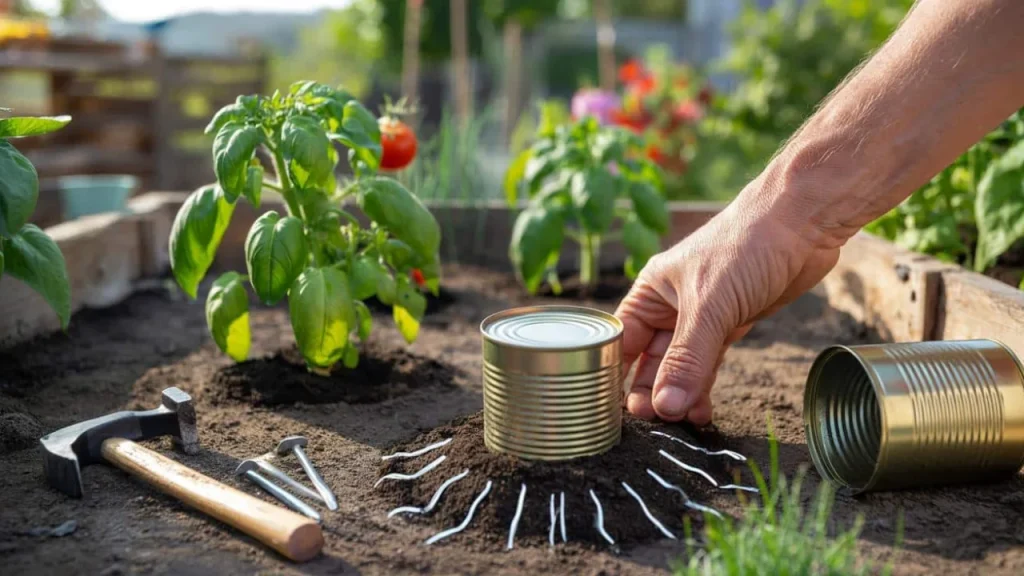
That moment changed everything. Instead of dropping the can into the bin, I grabbed a hammer and nail. Twenty minutes later, I had built my first automatic watering system from what most people would call trash.
Three years later, that simple tin can system still waters my herbs perfectly, and I’ve never bought an expensive irrigation setup. Sometimes the best solutions hide in plain sight, waiting for us to see past the recycling symbol.

When Summer Heat Becomes a Garden’s Worst Enemy
Every gardener knows the panic. You check the weather app and see five days of 90°F temperatures ahead. Your mind immediately races to the tomatoes, the lettuce, those expensive herbs you planted in spring. Will they survive? Should you flood them now or risk letting them cook?
Traditional watering methods create a frustrating cycle. Water too much, and it runs off the surface without reaching the roots. Water too little, and plants stress within hours. Most surface watering evaporates before plants can use it, especially during peak heat.
“The biggest mistake gardeners make is thinking more water equals better watering,” explains Maria Rodriguez, a sustainable gardening consultant from Phoenix. “Plants need consistent moisture at root level, not occasional flooding from above.”
Commercial automatic watering systems solve this problem but come with drawbacks. They’re expensive, require electricity or complex timers, and often use significant amounts of plastic. For small gardens or container plants, they feel like overkill.

The Trash-to-Treasure Automatic Watering System
The beauty of a homemade automatic watering system lies in its simplicity. Using common household waste—tin cans, plastic bottles, even old socks—you can create a slow-release irrigation system that delivers water directly to plant roots over several days.
Here’s how the basic tin can system works:

- Clean tin can (any size works, but 14-16 oz is ideal)
- Hammer and nail for creating drainage holes
- Duct tape or strong adhesive tape
- Small stones or pebbles
The process takes about 15 minutes. Punch 8-10 small holes around the bottom third of the can using a hammer and nail. Cover the top with tape to slow evaporation. Add a layer of small stones to prevent soil from clogging the holes.
| Container Type | Watering Duration | Best For |
|---|---|---|
| Small tin can (8 oz) | 2-3 days | Individual plants, herbs |
| Large tin can (16 oz) | 4-5 days | Tomatoes, peppers |
| Plastic bottle (20 oz) | 5-7 days | Large plants, raised beds |
| Glass jar (12 oz) | 3-4 days | Sensitive plants, seedlings |
“I was skeptical until I tried it,” says James Chen, a container gardener from Seattle. “My pepper plants survived a week-long heatwave while I was on vacation. The soil stayed perfectly moist the entire time.”
Bury the container next to your plant, leaving just the rim visible. Fill with water, and gravity does the rest. The small holes release water slowly, mimicking natural rainfall patterns.
Beyond Cans: Creative Containers for Every Garden Need
Once you understand the principle, almost any waterproof container becomes potential irrigation equipment. Yogurt cups work for small herbs. Large yogurt containers handle bigger plants. Even old socks filled with water and tied closed create a slow-drip system.
The key is matching container size to plant needs and adjusting hole size for different flow rates. Smaller holes mean slower release—perfect for plants that prefer consistent, light watering. Larger holes work for thirsty vegetables during peak growing season.
For apartment balconies, plastic bottles work particularly well. Cut the bottom off a 2-liter bottle, flip it upside down, and bury the neck end near your plant. Fill through the wide opening, and the narrow neck naturally restricts water flow.
“The best part is customization,” explains Sarah Thompson, an urban farming educator. “You can adjust everything—hole size, container depth, placement—based on what your specific plants need.”
Why This Actually Works Better Than Store-Bought Systems
Commercial irrigation systems often fail because they’re designed for average conditions. Your garden isn’t average. Your soil, climate, plants, and schedule are unique.
Homemade automatic watering systems adapt to your specific needs. Sandy soil drains quickly? Use larger holes for faster release. Clay soil holds moisture? Smaller holes prevent overwatering. Traveling for two weeks? Use multiple large containers per plant.
The environmental benefits matter too. Instead of buying plastic irrigation components that may break or become obsolete, you’re repurposing waste that would otherwise need processing and recycling.
Cost comparison tells the story clearly. A basic drip irrigation kit for a small garden costs $50-100. A homemade system using household waste costs nothing beyond the initial time investment.
“I’ve saved hundreds of dollars over five years by making my own watering systems,” notes David Park, who grows vegetables on his suburban patio. “Plus, when containers wear out, I just grab another can from the recycling.”
Real Gardens, Real Results
The proof lives in gardens across the country. Lisa Martinez in Austin uses beer bottles buried neck-down to water her drought-resistant natives. The bottles last for years and blend invisibly into her landscape design.
In Chicago, apartment dweller Robert Kim keeps his balcony herbs alive through summer travel using a collection of repurposed jars and containers. Each plant gets its own customized watering schedule based on container size and hole configuration.
Even experienced gardeners are converting. After 20 years of fighting with timers and drip lines, Oregon farmer Janet Williams now relies primarily on buried containers for her market garden vegetables. Her water usage dropped 30% while plant health improved.
FAQs
How long do homemade automatic watering systems last?
Tin cans typically last 2-3 years buried in soil, while plastic containers can last 5+ years with proper care.
Will the holes get clogged with soil?
Adding a layer of small pebbles inside the container prevents most clogging. Clean holes annually during garden maintenance.
Can I use this system for indoor plants?
Yes, but use smaller containers and fewer holes to prevent overwatering. Start with 3-4 holes and adjust based on results.
What happens if it rains while the system is running?
The slow release continues regardless of rainfall. Plants receive consistent moisture without the boom-and-bust cycle of natural precipitation.
How do I know if I’m using the right container size?
Check soil moisture around the container after 2-3 days. If soil is soggy, use fewer or smaller holes. If it’s dry, increase hole size or use a larger container.
Is this safe for vegetable gardens?
Absolutely. Clean containers thoroughly before use, and avoid any that contained chemicals or non-food products.